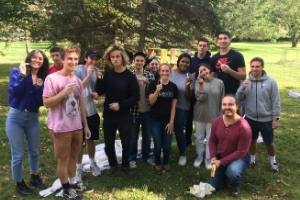
This past Wednesday I had the pleasure of sitting in on a brand-new College of the Environment class, ENVS282: Sustainable Agriculture and Food Systems. Taught by Dr. Rosemary Ostfeld ’10, the class focuses on the techniques and strategies that can be employed to make our farms and supply chains more sustainable, as well as exploring the effects of our consumption habits on the environment.
From left: Elizabeth Roff, Andres Arango, Harper Gambill, Randy Tyng, Mike Eustace, Kush Puri, Stephen Philipps, Kaitlyn McMullan, Rosemary Ostfeld, Deborah Eaddy, Samuel Peek, Olivia Weiss, Joe DeLollo, Drew Burnett, Leo Clibanoff, Noah Cohen.
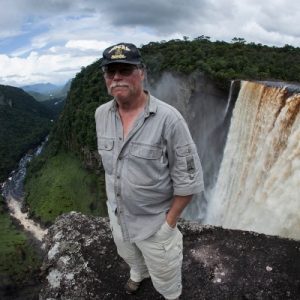
 Each academic year the COE gathers a small group of Wesleyan faculty members, a scholar of prominence from outside Wesleyan, and a small group of undergraduate students into a year-long academic think tank on a critical environmental issue. The aim of the think tank is not only to generate a deeper understanding of the thematic issue, but also to produce scholarly works that will influence national/international thinking and action on the issue. This year’s Think Tank theme: Meaningful Worlds: Listening and Learning Beyond the Human.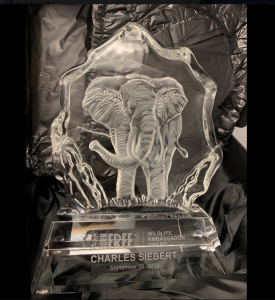
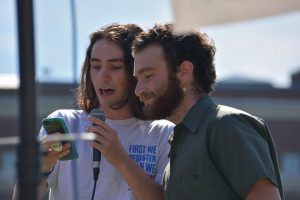
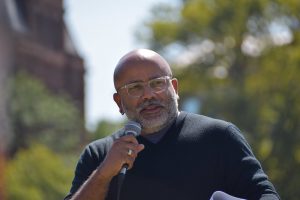
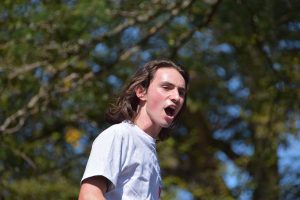
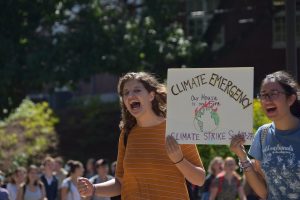
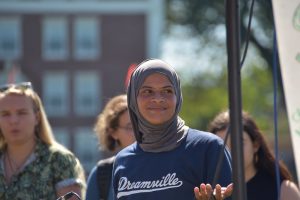
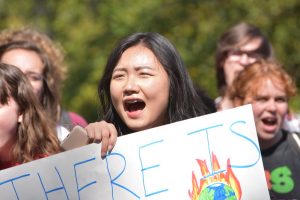
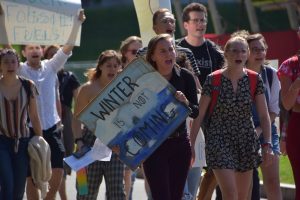 Wesleyan students organized various events for a day of climate action on September 20, 2019, as part of the week-long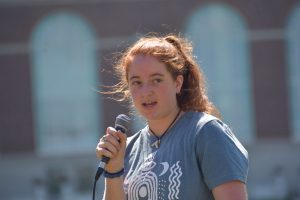
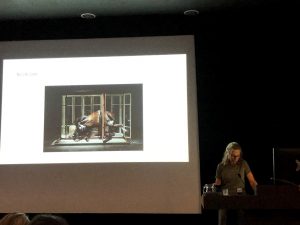 Last month, Kari Weil,
  On Thursday, September 12, Dr. Paul Spitzer ‘68 gave a talk titled “Lessons From the Osprey Gardens” to mark the first day of his monthlong stay at Wesleyan. Dr. Spitzer is a visiting guest who will be giving several talks over the course of his stay and leading field trips for Mike Singer’s BIOL220/ Conservation Biology class. His next seminar—