 Every year, the COE awards fellowships to fund summer research opportunities for Wesleyan students across all majors and class years. Introducing our 33 COE 2021 summer (and a few fall) fellows. Read more about their projects, below!
Nick Bowman ’23
archaeology
My research will focus on the recreation of ancient cultural and environmental conditions in relation to the cultivation of ancient medicinal plants by drawing on archaeological site reports, coring and shoreline data, geological maps, soil samples, and other source material to contextualize Professor Birney’s chemical findings.
Belle Brown ’22
environmental studies and government
This summer, I will work as a multimedia intern for the Rodale Institute in Kutztown, Pennsylvania, using social media, videography, and photography to share information about organic agriculture. In this position, I will continue to pursue my passion for sustainable agriculture, while also gaining invaluable experience in using multimedia to spread a message that grows increasingly urgent as the climate crisis intensifies.

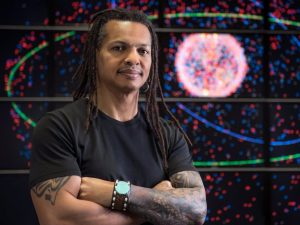 On April 5, 2021, the College of the Environment welcomed Moriba Jah, associate professor at The University of Texas at Austin, to present his lecture Near-Earth Space: The Lost Ecological Pleiad. The Earth has a number of ecosystems we can call an ecological Pleiades. To date, these ecological Pleiades have been constrained to the land, oceans, and air. However, there is an additional ecosystem, near-Earth space, which has yet to be globally acknowledged. To this end, Jah’s lecture focused on near-Earth space as a “lost” ecological Pleiad, comprised of “some abiotic objects such as micrometeoroids, a few humans in the Space Station, and a large number of anthropogenic space objects as a consequence of our technological developments.” In his lecture, Jah explored the known evolution of this Lost Pleiad, and underscored the need for its environmental protection.
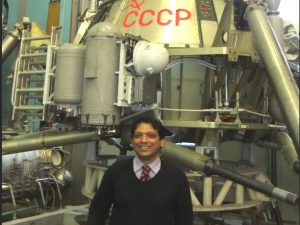 Wesleyan’s College of the Environment and History Department invited Dr. Asif Siddiqi, Professor of History at Fordham University in New York, to host his talk,
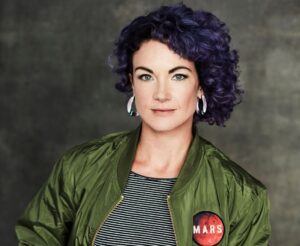 On December 8, 2020, the College of the Environment welcomed Lucianne Walkowicz, an astronomer at the Adler Planetarium in Chicago and co-founder of the JustSpace Alliance, to host their lecture,
 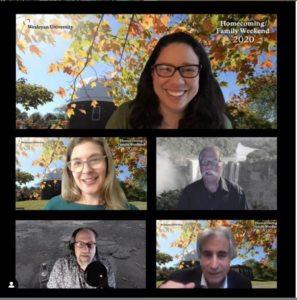 As part of the 18th annual Where On Earth Are We Going? Robert F. Schumann Environmental Studies Symposium, David Grinspoon and Martha Gilmore presented their talk, “Habitability and Life on Venus,” on October 17, 2020.