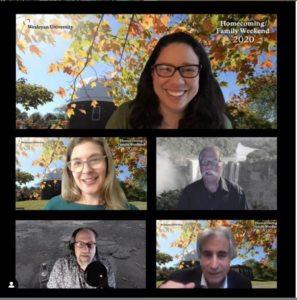
 As part of the 18th annual Where On Earth Are We Going? Robert F. Schumann Environmental Studies Symposium, David Grinspoon and Martha Gilmore presented their talk, “Habitability and Life on Venus,” on October 17, 2020.
At the beginning of the presentation, Grinspoon pointed out that, “Before the Space Age, there was an image of Venus as an earth like, but also tropical planet.” There were reasons for conceiving of Venus that way: its close proximity to Earth, similar size, and cloud covering. This idea of Venus’s habitability was proved false when the spacecraft Mariner II reached Venus in 1962 and revealed that Venus was “not at all earth like … so hot that no life could exist on that surface.” This disillusionment with Venus was documented in an editorial in the New York Times, which determined the discovery as “the beginning of the end of mankind’s grand romantic dreams.”
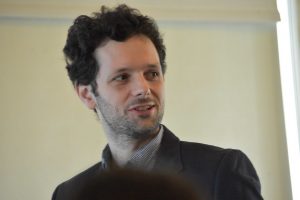 Alexander Wragge-Morley, Clinical Assistant Professor of Liberal Studies and History at New York University, visited campus on February 12, 2020, to share his lecture, “Words, Experience & Non-Resemblance: Representing Nature in 17th-Century England.” He discussed the way English naturalists, particularly botanist John Ray (1627-1705), represented their findings about concrete research in the natural world through figures meant to evoke emotional responses from their viewers.
 Meaning and language are commonly thought to be the exclusive province of humans. But is this thinking simply our own anthropocentric conceit? On November 2, 2019, Menakka and Essel Bailey ‘66 Distinguished Visiting Scholar in the College of the Environment Charles Siebert led a discussion about the nature of meaning in the world, the myriad of forms in which it manifests, and the many ways in which they inform our place in the world. The discussion, What on Earth Are They Saying: Listening and Learning Beyond the Human, was the 17th Annual Where on Earth Are We Going? seminar sponsored by the Robert F. Schumann Institute of the College of the Environment.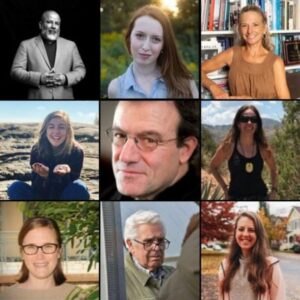
 Last weekend various Wesleyan sustainability groups joined local community gardeners, farmers, and activists for a conference on all things urban farming and food justice. The event was cosponsored by the Green Fund, the Middletown Economic Development Commission, the College of the Environment, the Wesleyan Resource Center, the Science in Society Program, and the African American Studies Department. With this wide array of support, student coordinators were able to collaborate with local stakeholders to put together a conference that was able to bridge the gap between Wesleyan and the surrounding community, as well as to provide the space for connections between Wes sustainability groups.
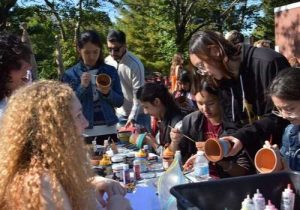
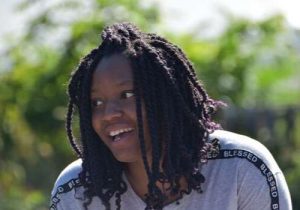 On Saturday, October 5, hundreds of Wes and Middletown community members spent their day soaking up the sun at

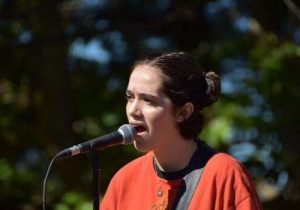
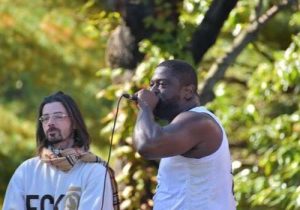
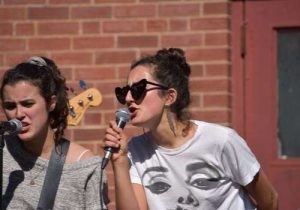
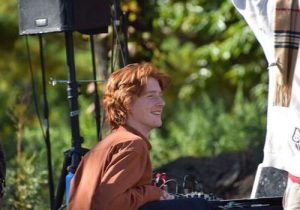
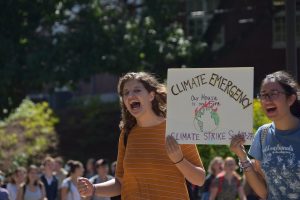
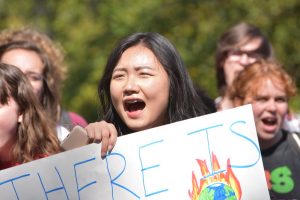
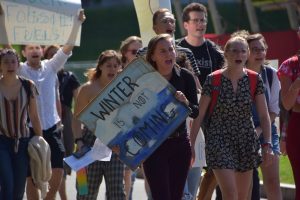 Wesleyan students organized various events for a day of climate action on September 20, 2019, as part of the week-long