
Elizabeth A. Byers is the 2021-22 visiting scholar in the College of the Environment. She is a senior wetland scientist with the West Virginia Department of Environmental Protection. During the last five years at WVDEP she has worked to create and implement an assessment tool that will become the law of the land in West Virginia in early 2022. Prior to joining DEP, she worked for 11 years as a Natural Heritage Ecologist and for 20 years as a hydrologist and conservationist in the Himalayas, East African rift, Andes, Rocky Mountains, and Appalachians. In 2020, Elizabeth published the first-ever field guide to the flora and ethnobotany of Mount Everest National Park.
 Each year the College of the Environment provides faculty-student research grants to provide faculty and their students an opportunity to conduct research that would not have been otherwise possible. Helen Poulos, adjunct assistant professor of environmental studies, and environmental studies & earth and environmental sciences major Ally Detre ‘22 launched a faculty-student research collaboration during the 2020-21 academic year working on a dataset documenting native woody plant recovery in the Big Bend Region of the Rio Grande. Ally received a COE summer fellowship in 2021 that allowed her to gain first-hand knowledge of the area with a trip to Big Bend National Park to resurvey a stretch of the river that experienced recent native riparian plant recovery and to work as a GIS technician for the Science and Resources Management division of Big Bend National Park.
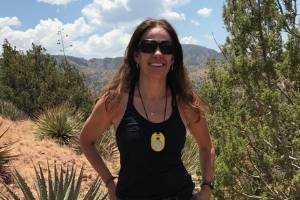 Dr. Helen Poulos, adjunct assistant professor of environmental studies, has been awarded a $300,000 NASA grant to examine forest type-conversion through the lens of evapotranspiration (plant sweat) in response to high-severity wildfire in southeastern Arizona. Poulos and her team will conduct their research using imagery gathered by the ECOSTRESS sensor mounted on the International Space Station. It will be the first-ever test of the ECOSTRESS sensor’s applicability for wildfire-related research.
 Last month, Kari Weil,
 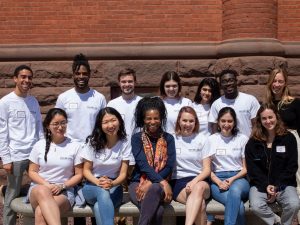 Assistant Professor of Psychology H. Shellae Versey, PhD and Emma Ritter ’19 launched a faculty-student research collaboration during the 2018-2019 academic year exploring Communities in Crisis: The impact of disasters on mental health. The research focused on environmental hazards—both natural and manmade—and the resulting effect on health and displacement among various communities. A COE faculty-student research a grant provided Versey and Ritter the opportunity to conduct research that would not have been otherwise possible.