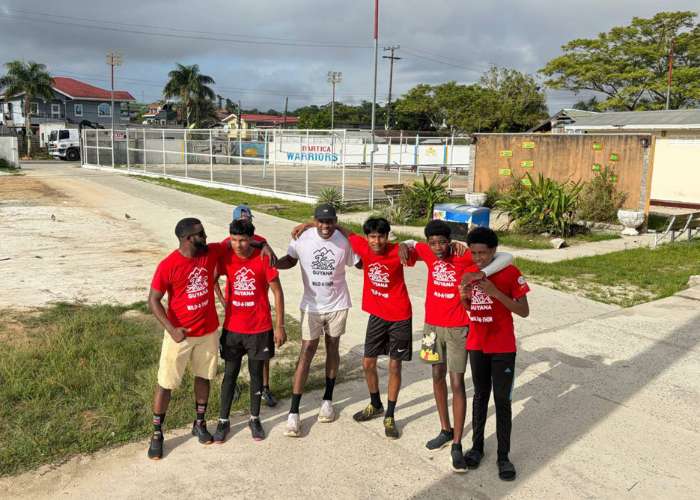
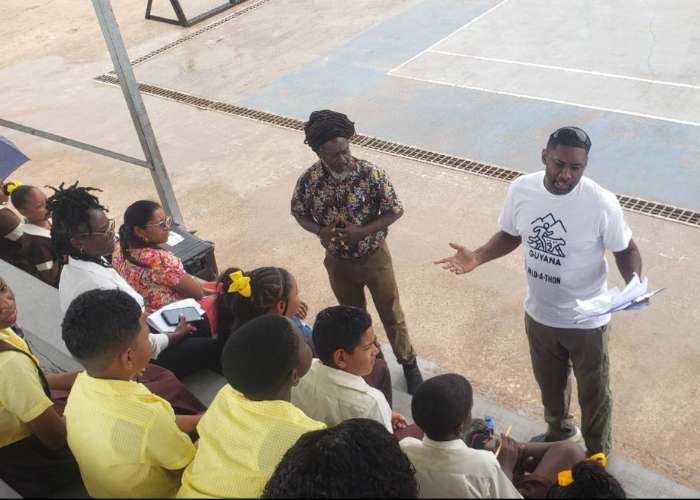
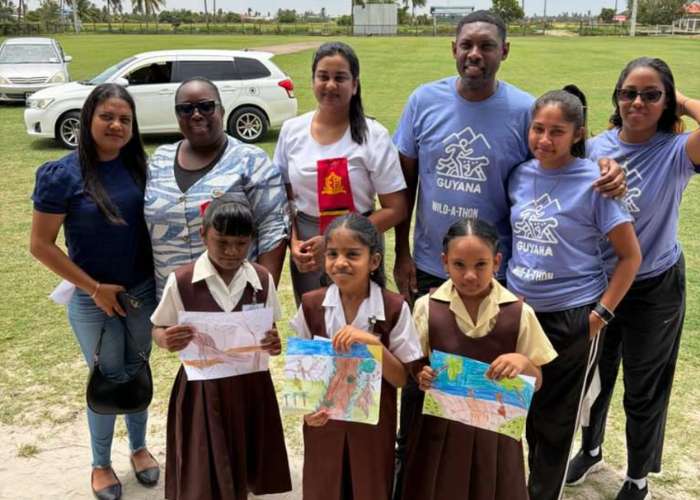
Anthony Cummings, Wesleyan’s Philip 71 and Lynn Rauch Endowed Professor of Climate Change, Sustainability, and Environmental Management, is an environmental scientist and avid runner. In March, he took on an extraordinary challenge: a Wild-a-Thon designed to spark conversations about wildlife conservation across an entire country. The 2026 Wild-a-Thon Series (March 8–18, 2026), hosted by the Guyana Wildlife Conservation and Management Commission, spanned all ten of Guyana’s administrative regions and combined 13.1-mile runs, primary school art competitions, and secondary school panel discussions under the theme “Our Wildlife and Us.”
What exactly is a Wild-a-Thon, how did you get involved with the Guyana Wildlife Conservation and Management Commission (GWCMC)?
The Wild-a-Thon is an event aimed at enhancing awareness of the importance of wildlife and the need for their protection, on the whole, in Guyana. I have been collaborating with the Guyana Wildlife Conservation and Management Commission (GWCMC) for some time, and this event naturally came out of our efforts to work towards the common goal of enhancing efforts for wildlife protection in the country. Guyana is the right place for this kind of activity because efforts aimed at enhancing environmental protection more broadly have been gaining momentum and adding the importance of wildlife to the list will help towards creating a holistic approach for safeguarding the country’s natural resources.
The project spans Guyana’s ten administrative regions. How were the routes chosen, and why was it important to include the entire country?
Guyana has ten administrative regions, and when conceptualizing human-wildlife interactions, each region has a unique aspect of interactions that needs to be acknowledged. For example, Region 4 hosts Guyana’s capital city, Georgetown, and most efforts aimed at addressing human-wildlife interactions challenges will have their genesis here. There is a botanical garden in Georgetown, a zoo, as well as the offices of the GWCMC. The Wild-a-Thon acknowledges this fact and focused on the aspects of human-wildlife interactions that are present here. The routes for the 2026 Wild-a-Thon were chosen to allow for the connectivity between the regions of Guyana and allow for activities to occur within 10 days.
You’ve described the event as a “conversation on the run.” What does that mean in practice, and what was the overall goal?
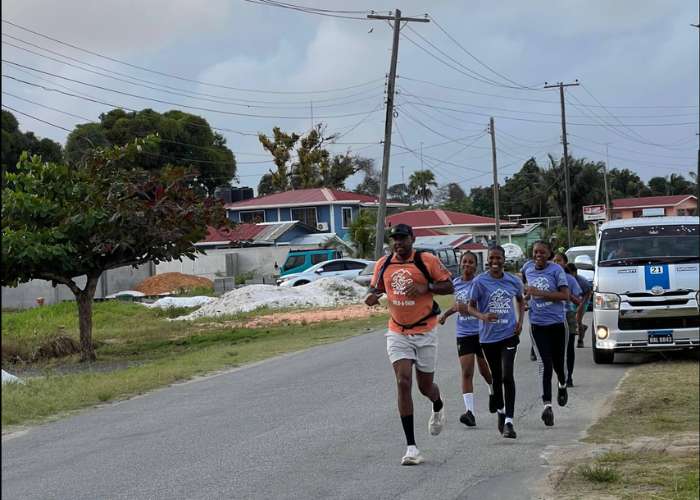
The idea of a conservation on the run means that as I run with participants, we get to know each other as we run. We talk about peoples’ observations of wildlife, their perceptions of wildlife and whether they have a favorite wildlife species and what they know about that species. I sometimes take the time to talk about challenges facing a particular species and what actions may be necessary to address these challenges.
Ten half marathons in eleven days is intense! How did you prepare, and why did you choose 13.1 miles as the symbolic distance?
Preparation was tough since the wild-a-thon was completed in March, and leading up to that date here in Connecticut there was a lot of ice around and the temperatures were a bit on the lower side. Thankfully I had some miles in my legs from the time that the weather was better and the desire to get it done. In the end it was a lot of fun and I’m happy I stuck to it. The 13.1 miles distance acknowledges, in some way, based on my earlier research, that every 10 to 13 days or so, a wild cat comes into contact with a human that leads to adverse outcomes for the wild cat.
Which run was the most challenging or memorable, and what made it stand out?
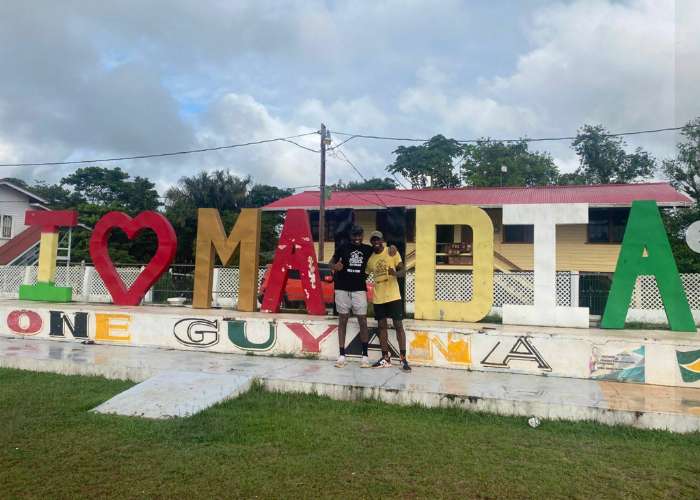
All the runs in each region were incredibly special as I’m not aware that anyone has ever completed a similar set of runs in Guyana’s history. The logistics of moving from one region to another was challenging and being able to get enough sleep for the next run was a real concern. Each run was unique for one reason or another, but given the logistical challenges and terrain, running in Mahdia was quite special. My team and I arrived for the Mahdia leg as the sun was setting and we had no idea whether the course we had proposed was even possible. Upon arriving at the local police station and checking on things, we realized that they were not expecting us. The police were incredibly gracious and welcomed us and the idea anyway and showed us a route that gave me an instant headache. I was picturing the hills and feeling the humidity and knew I was going to suffer. We decided on the route and I went to bed really stressed out. The next morning I decided to start 20 minutes before the scheduled time just to remove as much of the sun heat from the equation as possible. As it turned out, we made a mistake and took a different route than planned, but this new route took us into the rainforest and it turned out to be an absolutely delightful run because of the landscape. The Mahdia route is the one that I would like to share with others in the future.
Why do you personally run, and how does running connect to your work in environmental science and conservation?
I love running. I started out with the goal of running to stay healthy, and this still remains a key goal, but I also enjoy being a part of a larger community and watching others take their running journey to higher levels. I believe that folks can change their perspective of nature and the wild by taking a hike or run into new places. By spending more time out and focusing on their health and enhancing their quality of life, conservation and related topics may become more realistic because people will be taken to new places and better appreciate their environment. So while my running journey started out with my personal goal, now I run to encourage others to discover the joys or running, and to go to new places.
Who joined you along the way, and what were some of the most meaningful interactions or conversations you had?
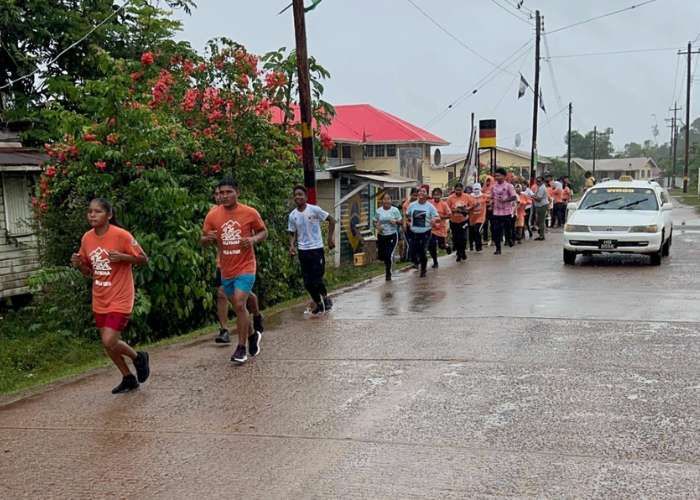
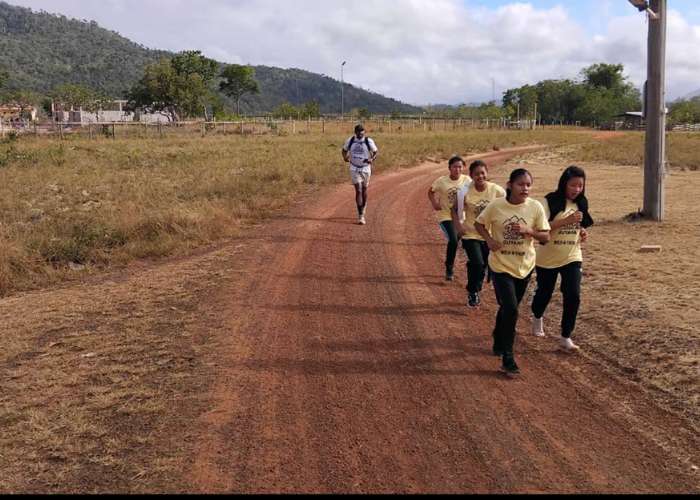
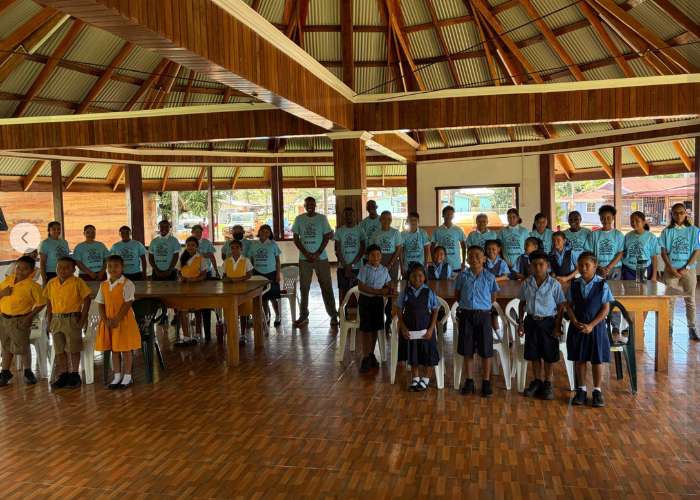
I was joined by some of the most amazing people. I had high schoolers join me, young adults, and even the founder of Stride592! The importance of moving more is taking root in Guyana and Stride592 is aimed at encouraging Guyanese to get out and move, through running and other activities. Onika Jervis of Stride592 and one of her colleagues joined me in Georgetown and Linden, respectively. In Mabaruma, in addition to more than 60 highschoolers, I was joined by the three Paul siblings, two brothers who are firemen and their 14-year old sister. For the sister, this was the first time she ran 13.1 miles. It was simply amazing to run with these siblings and to see the kindness of her brothers as they supported her along the way.
You emphasize that human health and wildlife health are inseparable. Can you explain that connection and how time outdoors shifts perspectives on conservation?
I hold the view that if people spend more time outdoors, in the wild and observing nature, they will have increased respect for the wild, and in the case of human-wildlife conflict, better appreciate the difficult positions we place wildlife in with our actions and livelihood choices. If we move more and do so in places where we can observe the wild and spend time in wild places, we will inevitably enhance our own health and be more appreciative of actions necessary to protect the wild.
The Wild-a-Thon combined running, art competitions, and panel discussions. What was the thinking behind that approach, especially in engaging students?
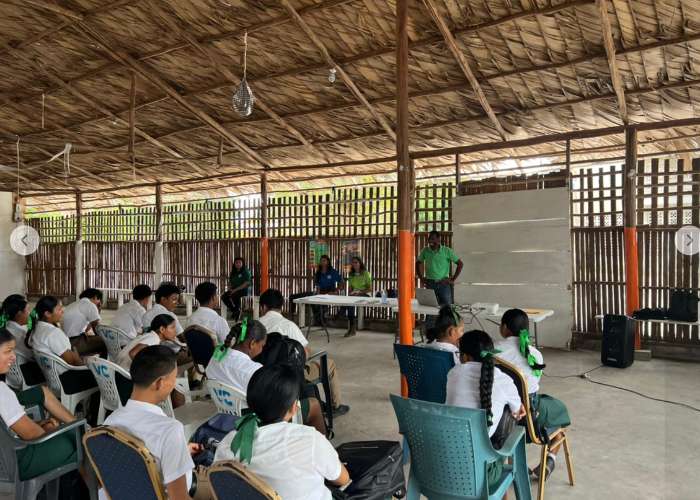
I think we need to approach education and awareness initiatives with the attitude that people are different and some will find value in one type of activity or approach, while someone else will find another pathway more interesting to them. The series of activities we pursued this year were aimed at getting the attention of people from all demographics with running aimed at older folks while the art competition and panel discussions were aimed more at children and youth. I believe this approach was appropriate for the audience we had in mind, but we will remain open minded on what else we can do to encourage folks to think more about the wild.
Did anything about the experience surprise you, and what’s next for the Wild-a-Thon?
I was surprised by how many people are embracing running in Guyana. I am equally excited that folks want to get out and run and this encourages me that next year we can have runs and walks that have different target audiences in mind. For example, I think we can have a half marathon with prizes for the best performers and other prizes for folks who participate. The first iteration of the wild-a-thon was completed, next year we aimed to engage more folks from Guyana and hopefully around the world to come to Guyana to join us. March 2027, mark your calendar and get ready!
What advice would you give to someone who wants to connect their academic work with real-world impact?
Find something that you like and that you can share with the world. And, have fun.