By Ikimot Siyanbola
Note* The terms Native American and Indigenous are used interchangeably in this blog, but it’s important to know that Indigenous is an umbrella term that not all Native Americans may accept.
On September 22nd, Rooted Solidarity was honored to welcome Xochitl Garcia to Wesleyan to deliver a workshop about Indigenous food history. The workshop primarily focused on how Indigenous food history has been hidden, obscuring the crucial contributions of Native people to our food system. Participants included community members, as well as Wesleyan students, faculty and staff. Attendees learned through doing, as the workshop consisted of playing trivia to test our knowledge.
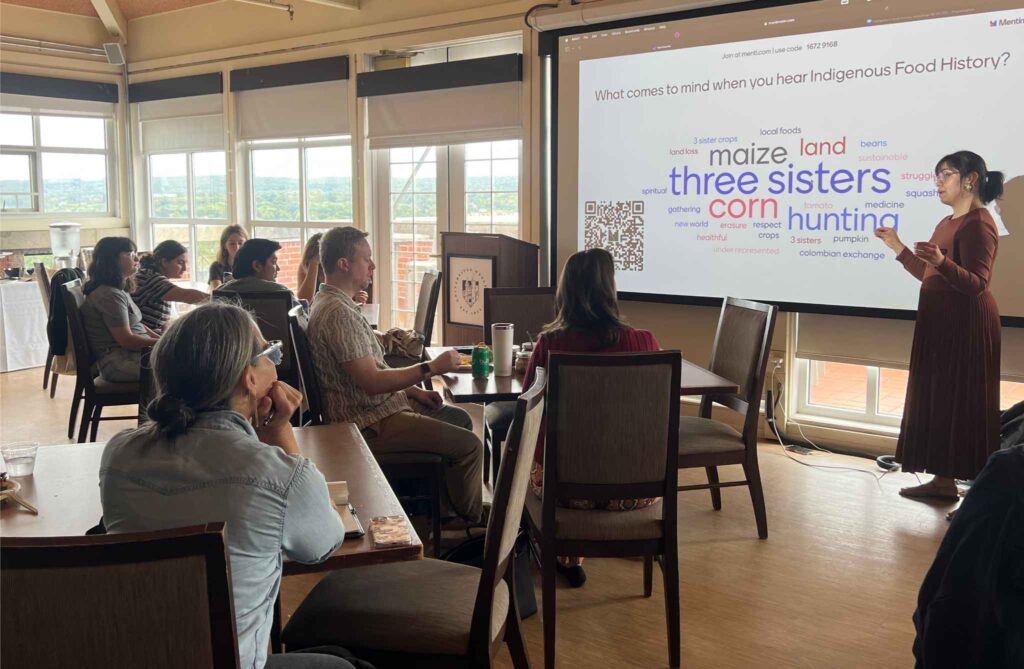
Most people who receive a K-12 education in the US learned about Native Americans briefly in elementary school. Often it was one unit in a text book that supported a genocidal narrative that indigenous people only lived in the past. With this workshop, in addition to learning more about Native American history generally, we also learned about their rich food history. Indigenous people aren’t people of the past; they are part of our communities; they impact our food systems and have been impacting them for a long time.
Xochitl encouraged us to challenge what we learned in our educational systems – to critically analyze what we learned in school. For instance, the narrative we were taught about Johnny Appleseed is that he was a generous man who gave away seeds and promoted environmental stewardship. In reality, what we learned in this workshop is that Johnny Appleseed (John Chapman) planted seeds on Native land in order to lay claim to that land and profit from the production of hard cider, harvested from bad apples. Questioning this mythologized story, helps us unearth the true settler colonial history underneath.
Xochitl also challenged the idea that Native Americans only eat three foods: squash, maize, and beans. Another popular fruit among Native Americans are pawpaws. Pawpaws were a source of sustenance for people of the lower socioeconomic class, like enslaved people and people in the region of the Appalachian Mountains. Native Americans put this underrated fruit to many uses because of its nutritional value, which is greater than that of bananas, apples, and oranges. Something captivating is that they used pawpaw seeds to treat head lice. Pawpaws aren’t as popular as other fruits because of their nickname, “the poor man’s fruit”. Because of the association with lower socioeconomic classes, the fruit was devalued and there was no incentive to sell it. Therefore, it’s not as commonly found commercially. Another staple food we learned about are acorns. They were a staple because of their nutritional content and storability. Native Americans developed a way to remove tannins from acorns by leaving them for a few days by a stream. Gaining this knowledge helped to defy stereotypes and peaked participants’ interest to learn more about indigenous food history.
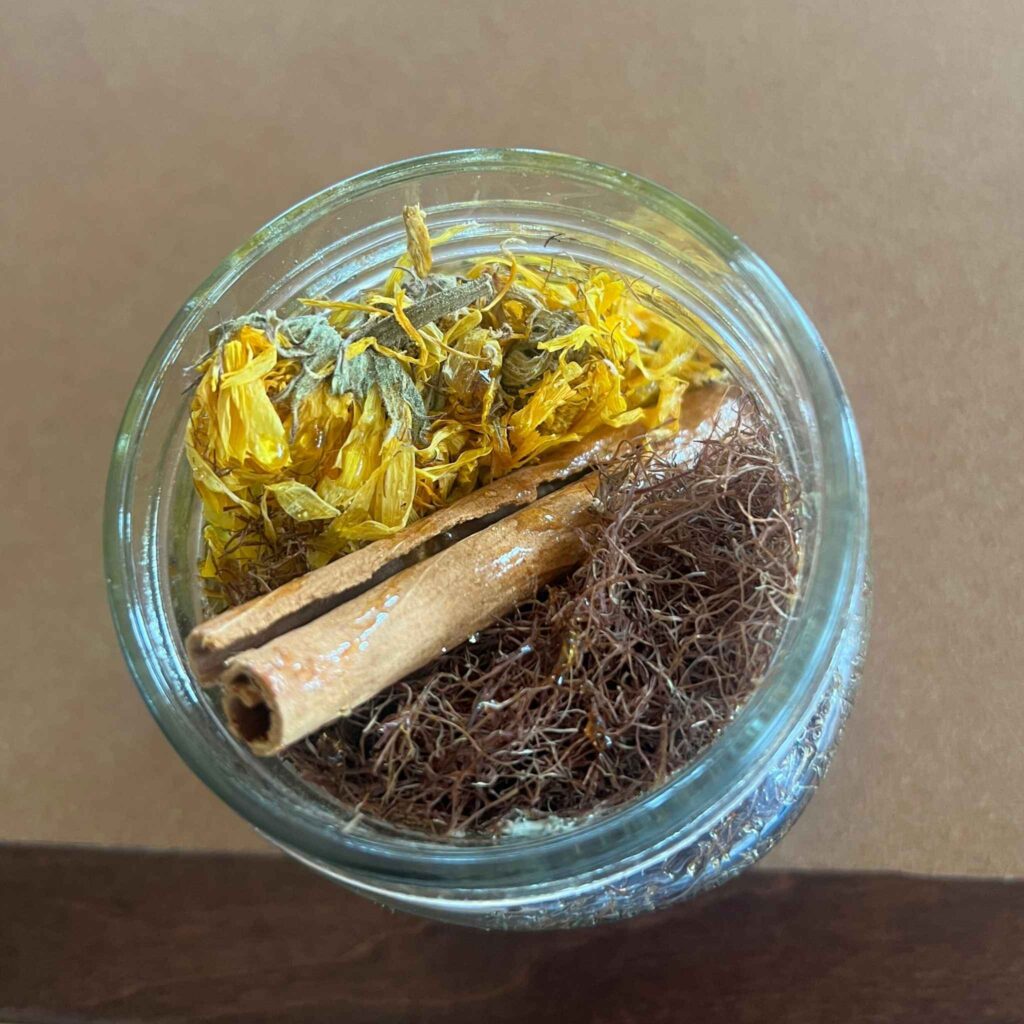
Other fun facts we learned:
- The Cherokee tribe developed the first agricultural census. This census was a record of what foods were planted, who planted them, where these plants came from, and planting conditions.
- The Yuki tribe used stewed manzanita amongst other naturally occurring foods to treat cataracts.
- It takes around 5-10 years for pawpaws trees to even begin the process of producing a fruit. Once it’s able to grow, the tree continues to produce pawpaws of top edible quality.
All in all, this workshop prompted attendees to dig deeper into food and land justice related to Native Americans. Indigenous people’s land rights isn’t a topic that should be taken lightly, especially considering how difficult it is for indigenous tribes to become federally recognized. Not all tribes are federally recognized because it’s expensive, and blood quantums (a racist process of going through one’s family tree and using mathematical equations to calculate indigeneity) are required. Besides the fact that people’s ancestral trees may not be readily available, this is a rather invasive process that can cause groups to shy away from attempting to become federally recognized. In turn this can cause tribes to lose out on land rights they deserve. With all this in mind, it’s important to think of how land theft from Native Americans affects the country at large and erases their history. It’s part of our duty as people who live in the United States to educate our peers on Indigenous land rights and food history.