2026 summer fellowship app now open!
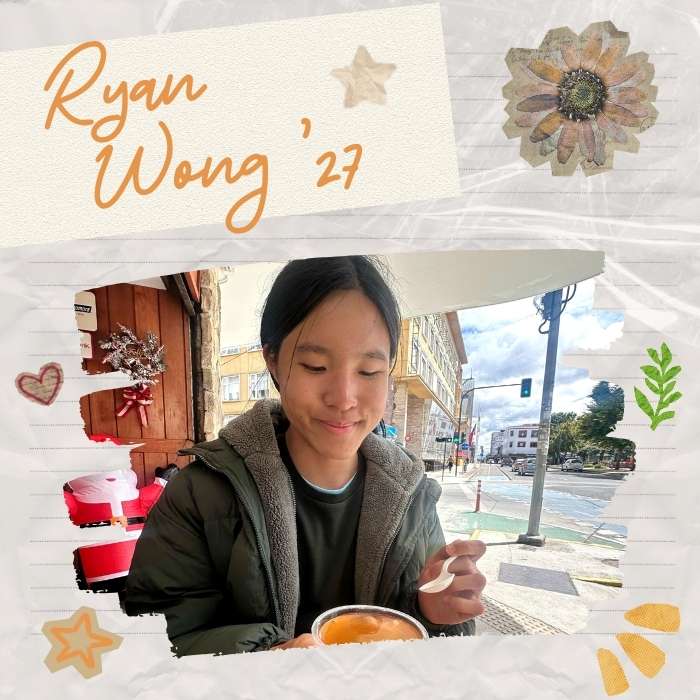
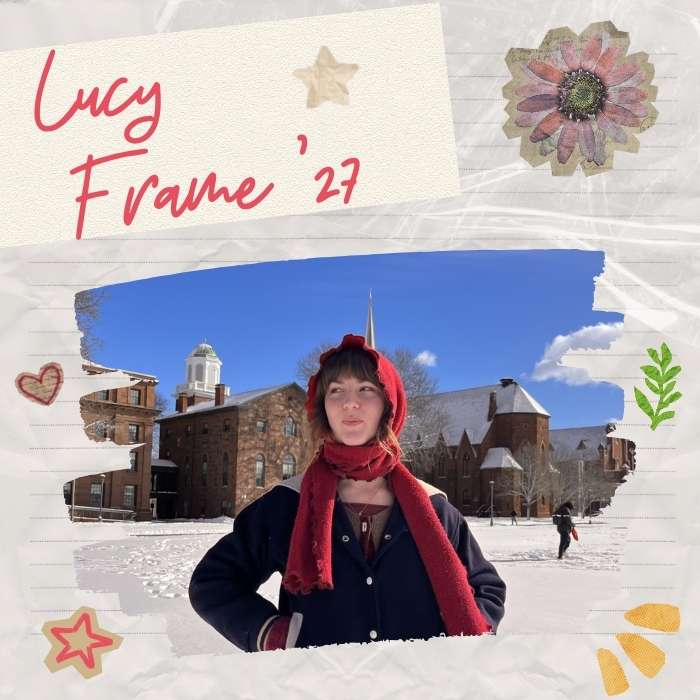
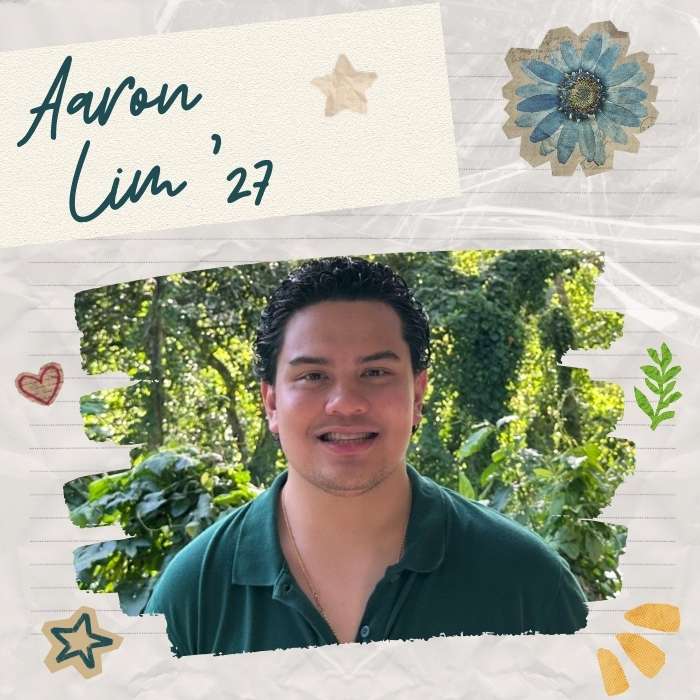
The Bailey College of the Environment (COE) Research Fellowship Program allows current Wesleyan undergrads to undertake research on environmental topics under the guidance of a faculty mentor, either during the summer or during fall or spring semesters. Projects must relate to any of the broad themes covered by Environmental Studies and the Bailey COE. Fellowships are available to current Wesleyan juniors, sophomores and first-years, regardless of major, and may be undertaken at Wesleyan or anywhere in the world. Full summer research fellows will receive a total of $5000. Partial summer & fall or spring fellowships, also available. Deadline for all: February 25! Need more info? Email lkenney01@wesleyan.edu! Apply by February 25!

goh ’24: from wesleyan to washington

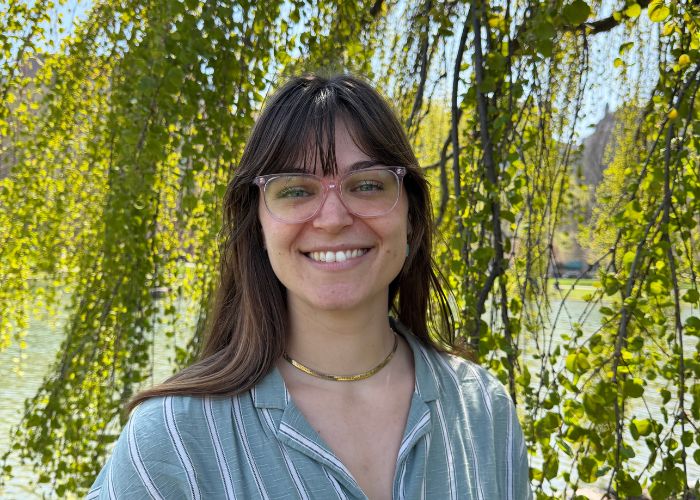
Debbra Goh ‘24 (ENVS/RELI) recently completed a year-long James C. Gaither Junior Fellowship at the Carnegie Endowment for International Peace, in Washington, DC. She is currently a research assistant for the Sustainability, Climate, and Geopolitics Program there.

What research did you work on as part of the Gaither Junior Fellows program?
I finished my tenure as a junior fellow in summer 2025, but I continue to work as a Research Assistant in the Sustainability, Climate, and Geopolitics Program at the Carnegie Endowment for International Peace. I contribute to a range of research initiatives spanning the program’s core focus. My work spans four main areas: the geopolitics of clean energy technology, climate mobility, climate activism, and climate adaptation.

Read more

Turning Food Justice Into state Policy

On Wednesday, February 3, Wesleyan was honored to welcome Randall Mel, Jr., director of Wellness and Nutrition Services for Middletown Public Schools, to facilitate a workshop about the state legislative process, food justice advocacy, and how students can get involved. Attended by members of food justice organizations from all across the state, as well as Wesleyan students and faculty, the workshop gave attendees concrete and actionable advice to begin influencing policy in Connecticut. The event was the first in a series of Activism & Advocacy Workshops being held this spring.

Mel drew from his personal experience as a food advocate working in the Middletown Public Schools, as well as with End Hunger CT. He began the workshop by going over the schedule and structure of the Legislature, emphasizing that even during small “budget adjuster” legislative sessions, like 2026, student voices can have a powerful impact on maintaining funding for important programs.

Read more

envs197 students engage in enviro events

by Kate Miller

One of the many activities in the primary gateway course to the Environmental Studies degree, Introduction to Environmental Studies (ENVS197), is the “Check it Out” assignment. Students are tasked with attending an environmental event on or off campus and submitting their reflection on key aspects, such as sponsoring organization, goals, audience and their own reactions. These can include films, talks, museum visits, conferences, meetings, workshops and volunteer events such as a landscaping work party, clean-ups and others.

Each semester more than 30 percent of the students choose a service project, and overwhelmingly their reflections convey a sense of comradery and satisfaction, and often a deeper understanding of what land stewardship requires. Most express a strong interest in doing it again.

Annabel Schneir reflected on a clean-up she and another student, Ella Hendricks, participated in at the closed landfill, which now hosts a kayak launch and trail. “I learned about a new place in Middletown, learned about what it looks like when erosion control goes wrong, and got the privilege to meet and observe how dedicated the locals are to preserving their environment. Everyone at the event was incredibly gracious, and it reminded me how good it feels to take action. It is hard not to be troubled by the state of our world, but doing something tangible, however small, makes it feel a little more bearable.”

Students visited a variety of on and off-campus locations for volunteer work, including Ravine Park, a city-owned preserve just a block from campus, which many used for a variety of other reasons including to conduct another project, the Ecosystem Walk, or for inspiration on their Nature & Art project. 

Read more

Wes Students & Faculty explore Manresa Island

During fall 2025, students and faculty from across Wesleyan pursued a coordinated set of research and creative projects at Manresa Island in Norwalk, Connecticut. The 25-acre island within a tidal marsh system of the Long Island Sound served as a Jesuit retreat in the late 19th and early 20th centuries before being acquired by Connecticut Light and Power for the construction of a coal-fired power plant. Over its 50 years of operation, the plant transitioned from coal to oil and expanded the land mass by roughly 100 acres, largely through the disposal of coal ash and dredge spoils. Since the plant’s decommissioning and abandonment in 2013, the island has developed an urban ecology marked by remnant industrial structures, an early-successional birch forest rooted in ash deposits, and resident populations of turkey, deer, and osprey along its rocky shoreline.

The semester brought together students and faculty in the humanities, arts, and earth and environmental sciences to explore a post-industrial coastal landscape in rapid socio-political and ecological transition. (The site is proposed as a park providing public shoreline access, funded by a philanthropic 501(c)3.) Students in Energy Legacies and Ecological Futures (HIST161/ENVS249/STS161), taught by Courtney Fullilove, launched the Manresa Stories Oral History Project, interviewing former power plant workers, community members, and others with long-standing ties to the island.  Working in partnership with University of Connecticut’s Engaged, Public, Oral, and Community Histories (EPOCH) and Central Connecticut State University’s Public History Programs, students used the digital oral-history platform TheirStory to record, archive, and exhibit community histories. George Schunk ‘28, the GIS assistant for the course, developed a StoryMap integrating archival materials gathered by the class, including company logbooks, city planning reports, photographs, and artifacts recovered on site. Through this work, students explored how a tidal estuary formed in glacial retreat some 18,000 years ago became, by the 21st century, a site of decayed fossil fuel infrastructure and chronic pollution.

In Soils, Dana Royer’s students sampled soils, leaves, and tree cores in the birch forest that has established itself on coal-ash deposits in the last fifty years. Their measurements confirmed the higher organic carbon content of the ash relative to a nearby control site. Tree ring analyses offered a record of environmental change over the lifetime of the trees, while samples of gray birch showed that the species concentrates toxins in its leaves but not its wood, indicating possibility for phytoremediation strategies.

Read more

from campus to the ct capitol

On Wednesday, February 18, Wes students, faculty, and staff joined former state rep Christine Palm, founding director, The Active Voice, for From Campus to the Capitol: Your Step-by-Step Guide to Transforming Wesleyan Student Voices into Connecticut Environmental Policy Change. The event was sponsored by the Bailey College of the Environment.