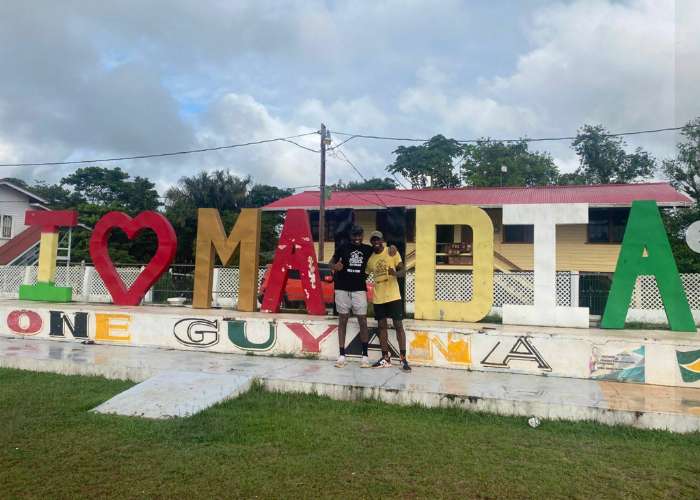
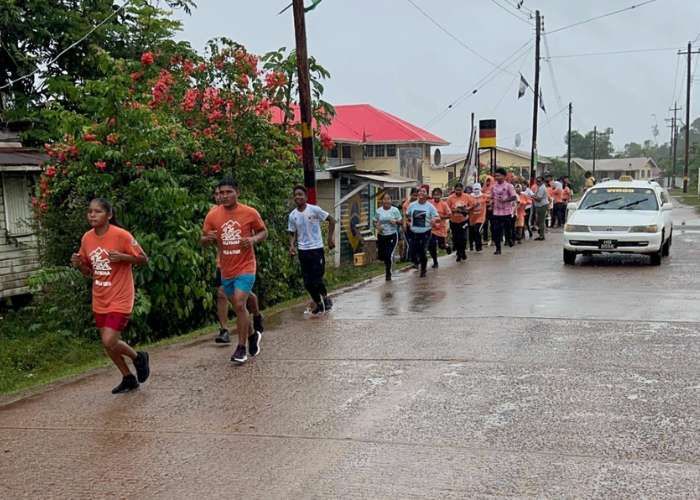
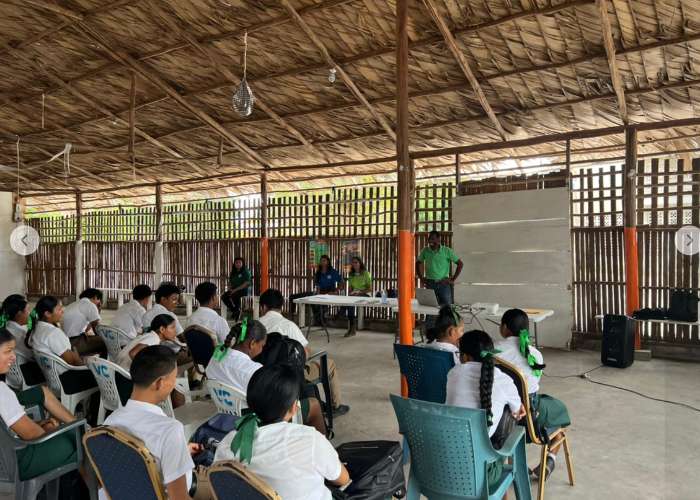
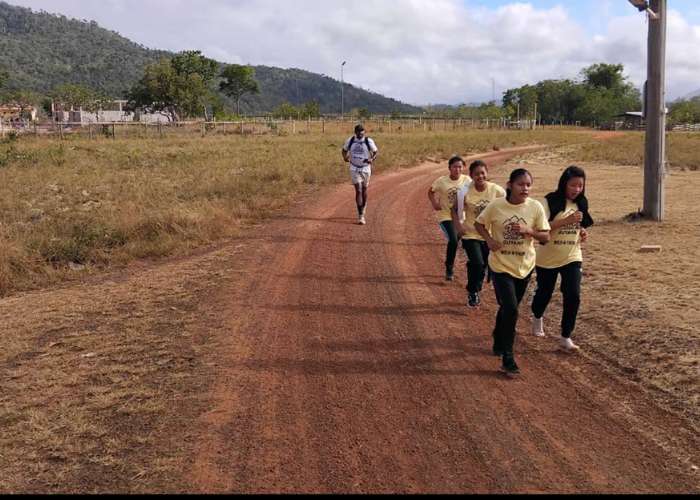
Anthony Cummings, Wesleyan’s Philip 71 and Lynn Rauch Endowed Professor of Climate Change, Sustainability, and Environmental Management, is an environmental scientist and avid runner. In March, he took on an extraordinary challenge: a Wild-a-Thon designed to spark conversations about wildlife conservation across an entire country. The 2026 Wild-a-Thon Series (March 8–18, 2026), hosted by the Guyana Wildlife Conservation and Management Commission, spanned all ten of Guyana’s administrative regions and combined 13.1-mile runs, primary school art competitions, and secondary school panel discussions under the theme “Our Wildlife and Us.”
faculty
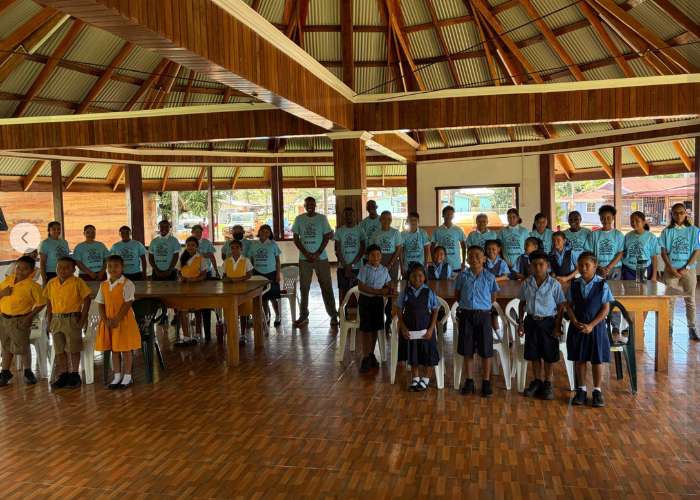
envs197 students engage in enviro events
by Kate Miller
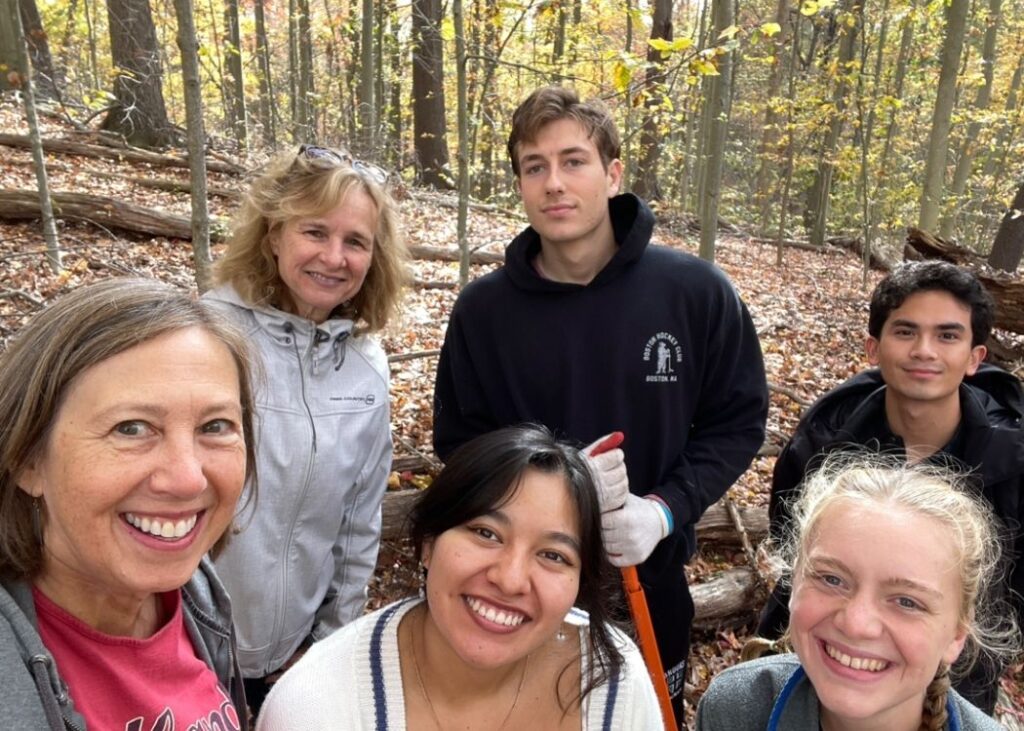
Clockwise from left Visiting Assistant Professor Kate Miller, community volunteer Rebecca MacLachlan, Will Rassier ’29, Leonidas Boutris ’27, Graduate Teaching Assistant Elizabeth Gerbi and Bethzy Meija Jaime ’28 work to remove invasive species such as burning bush from Ravine Park, a city-owned park just a block from campus. 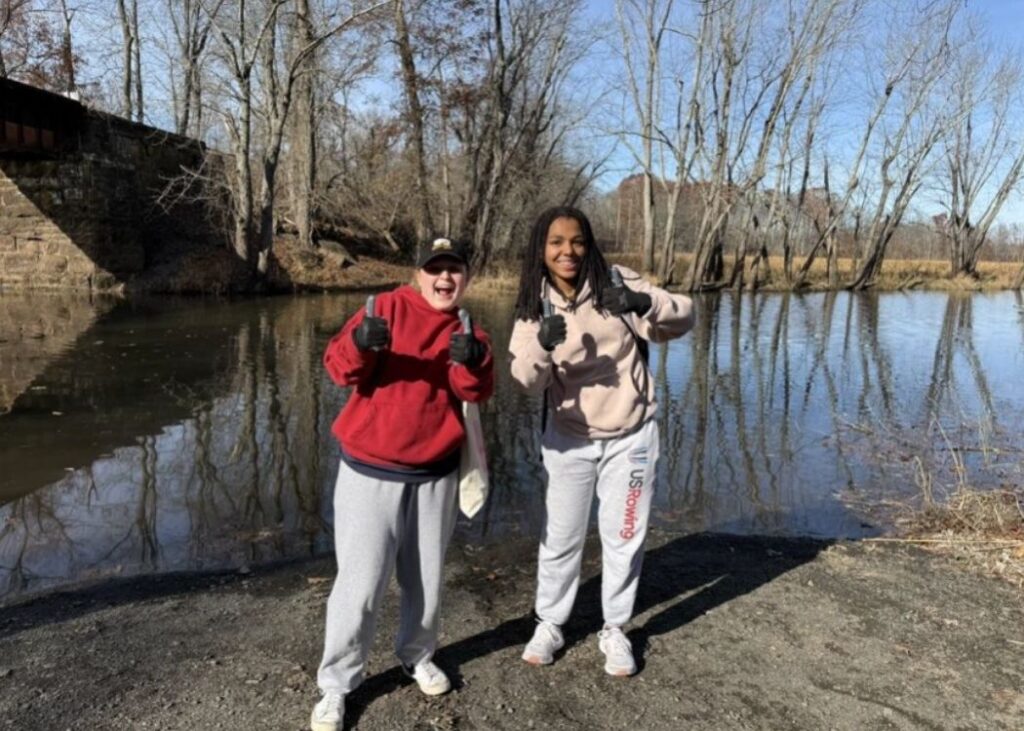
Annabel Sheir ’29 and Ella Hendricks (29 work with others at a clean-up at the Middletown Kayak Launch and Landfill organized by the Jonah Center, a local non-profit that has been expanding recreational use of the site. 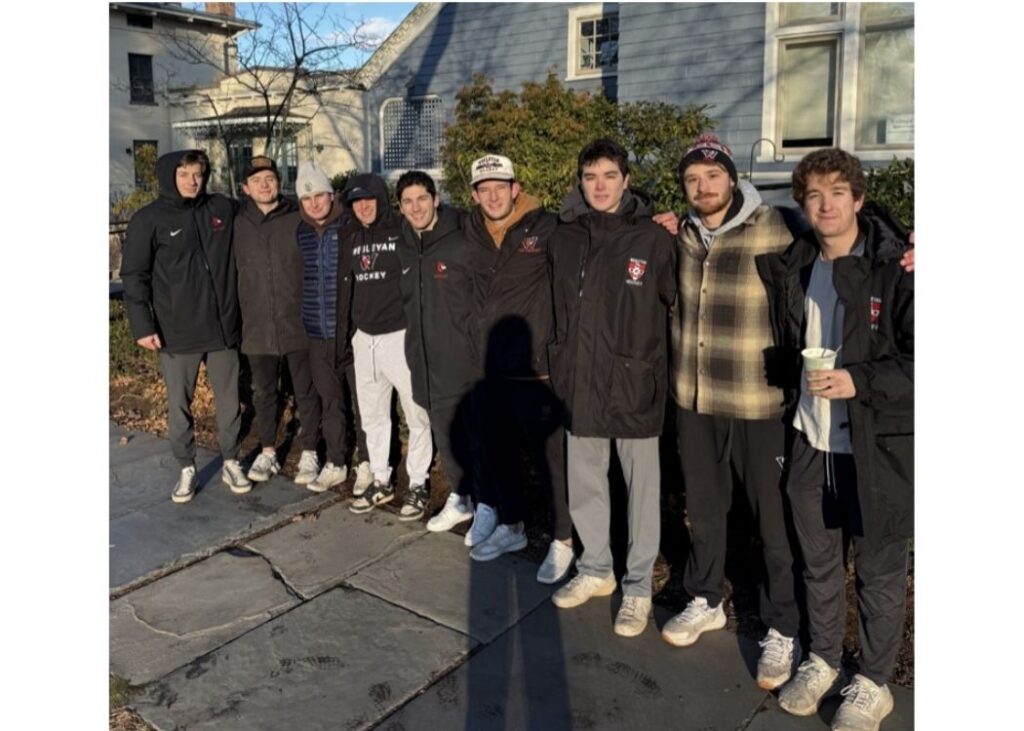
Current and former Intro to Environmental Studies students along with fellow hockey team members help out with a landscaping project at the Bailey College of the Environment, pulling non-native plants out and replacing them with native species. L-R Will Rassier ’29, Dallas D’amato ’27, Jack DesRuisseaux ’29, jack Bosco ’26, Dylan Margel 29’, Danny Judge ’26, Ryan Garvey ’29, Patrick McDevitt ’28, Jakub Kohn ’28. Andie Bisceglia, COE Administrative Assistant, organized the event. 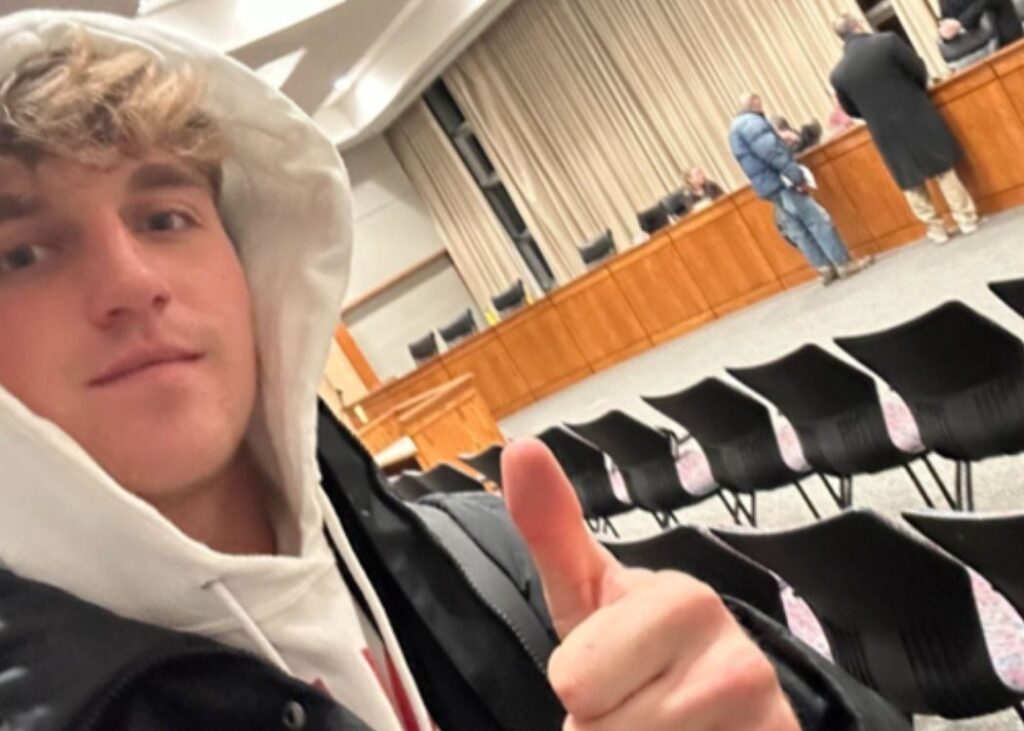
The impacts of those choosing other events are no less important as learning experiences. Attending a meeting of Middletown’s Inland Wetland and Watercourses Agency, Riley Harvey ’29 commented that “…the process was much more sophisticated than I had previously thought. It made me think about what would happen if agencies like this one did not exist; how the environment would be at even greater risk.” 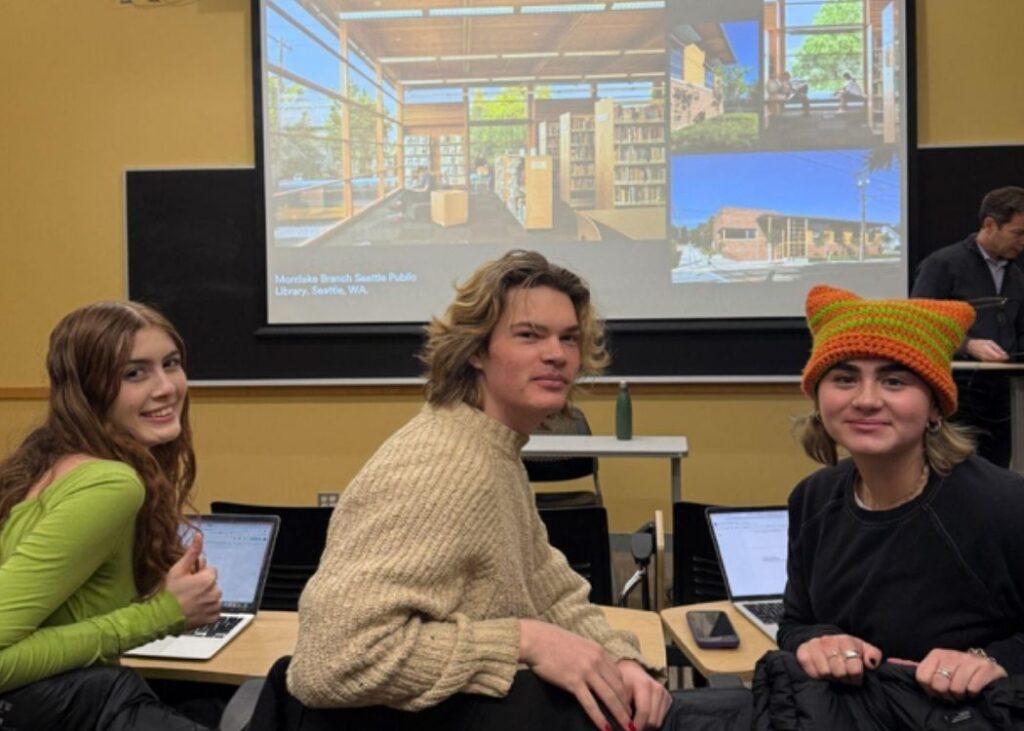
Anya Bernardo ’28, Finnian Hayden ’28, and Louie Borris ’28 attending the Art Lecture: Richard Yancey ’85—Building the Future: Towards a Climate Ready Architecture. 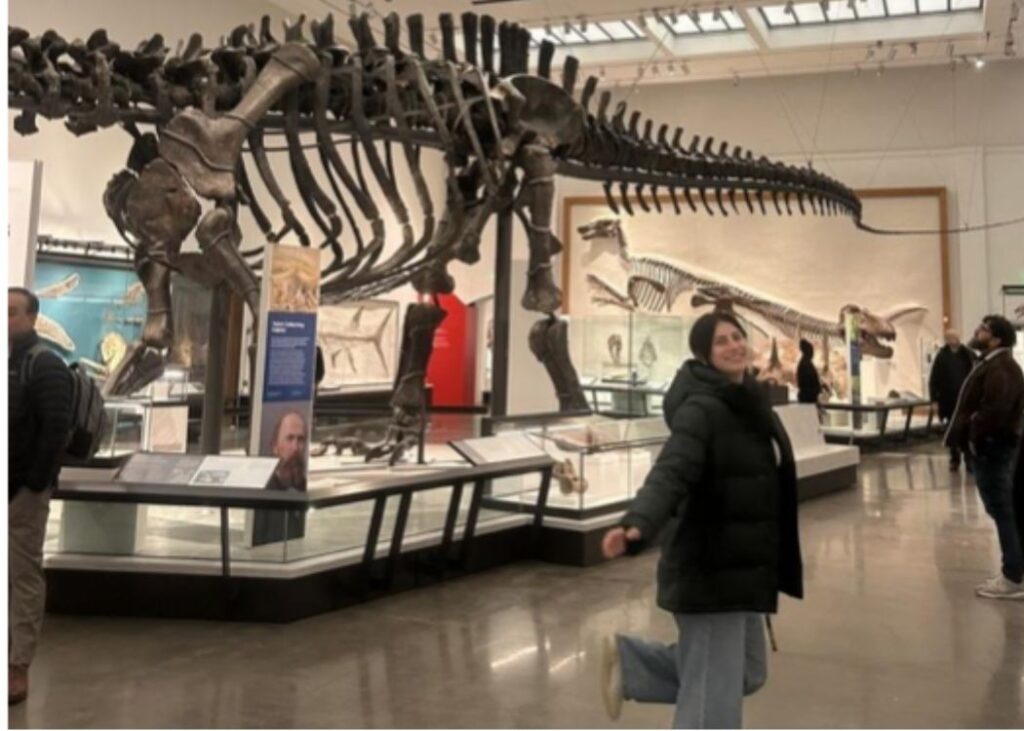
Eliza Lampert ’29 frolics with dinosaurs at the Peabody.
One of the many activities in the primary gateway course to the Environmental Studies degree, Introduction to Environmental Studies (ENVS197), is the “Check it Out” assignment. Students are tasked with attending an environmental event on or off campus and submitting their reflection on key aspects, such as sponsoring organization, goals, audience and their own reactions. These can include films, talks, museum visits, conferences, meetings, workshops and volunteer events such as a landscaping work party, clean-ups and others.
Each semester more than 30 percent of the students choose a service project, and overwhelmingly their reflections convey a sense of comradery and satisfaction, and often a deeper understanding of what land stewardship requires. Most express a strong interest in doing it again.
Annabel Schneir reflected on a clean-up she and another student, Ella Hendricks, participated in at the closed landfill, which now hosts a kayak launch and trail. “I learned about a new place in Middletown, learned about what it looks like when erosion control goes wrong, and got the privilege to meet and observe how dedicated the locals are to preserving their environment. Everyone at the event was incredibly gracious, and it reminded me how good it feels to take action. It is hard not to be troubled by the state of our world, but doing something tangible, however small, makes it feel a little more bearable.”
Students visited a variety of on and off-campus locations for volunteer work, including Ravine Park, a city-owned preserve just a block from campus, which many used for a variety of other reasons including to conduct another project, the Ecosystem Walk, or for inspiration on their Nature & Art project.
Wes Students & Faculty explore Manresa Island
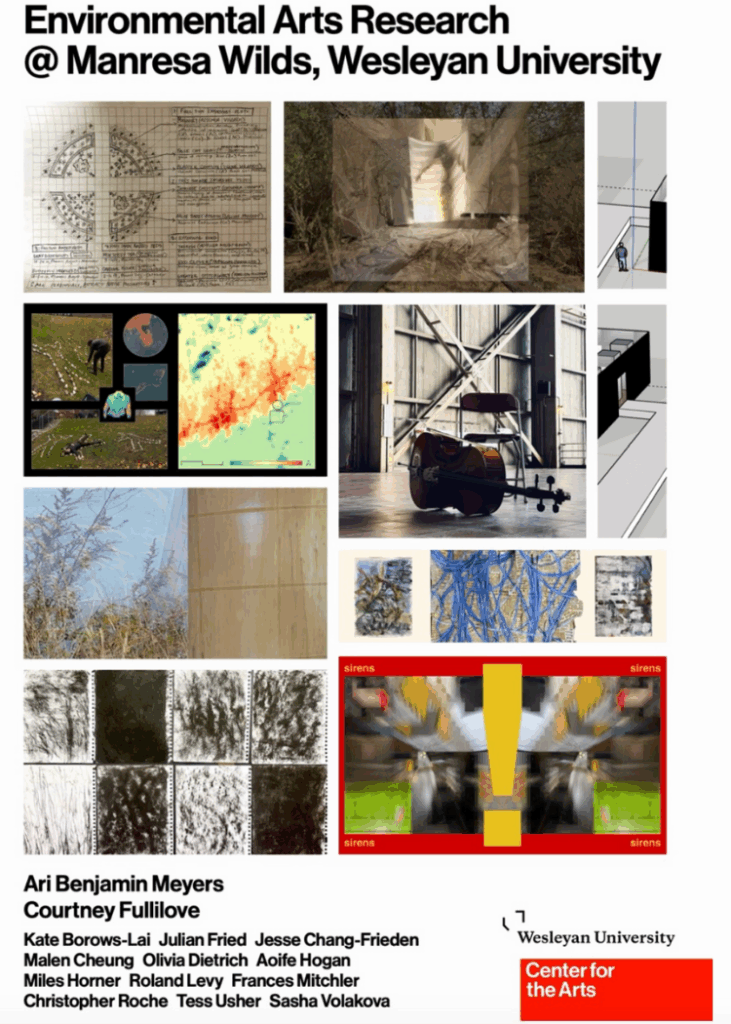
During fall 2025, students and faculty from across Wesleyan pursued a coordinated set of research and creative projects at Manresa Island in Norwalk, Connecticut. The 25-acre island within a tidal marsh system of the Long Island Sound served as a Jesuit retreat in the late 19th and early 20th centuries before being acquired by Connecticut Light and Power for the construction of a coal-fired power plant. Over its 50 years of operation, the plant transitioned from coal to oil and expanded the land mass by roughly 100 acres, largely through the disposal of coal ash and dredge spoils. Since the plant’s decommissioning and abandonment in 2013, the island has developed an urban ecology marked by remnant industrial structures, an early-successional birch forest rooted in ash deposits, and resident populations of turkey, deer, and osprey along its rocky shoreline.
The semester brought together students and faculty in the humanities, arts, and earth and environmental sciences to explore a post-industrial coastal landscape in rapid socio-political and ecological transition. (The site is proposed as a park providing public shoreline access, funded by a philanthropic 501(c)3.) Students in Energy Legacies and Ecological Futures (HIST161/ENVS249/STS161), taught by Courtney Fullilove, launched the Manresa Stories Oral History Project, interviewing former power plant workers, community members, and others with long-standing ties to the island. Working in partnership with University of Connecticut’s Engaged, Public, Oral, and Community Histories (EPOCH) and Central Connecticut State University’s Public History Programs, students used the digital oral-history platform TheirStory to record, archive, and exhibit community histories. George Schunk ‘28, the GIS assistant for the course, developed a StoryMap integrating archival materials gathered by the class, including company logbooks, city planning reports, photographs, and artifacts recovered on site. Through this work, students explored how a tidal estuary formed in glacial retreat some 18,000 years ago became, by the 21st century, a site of decayed fossil fuel infrastructure and chronic pollution.
In Soils, Dana Royer’s students sampled soils, leaves, and tree cores in the birch forest that has established itself on coal-ash deposits in the last fifty years. Their measurements confirmed the higher organic carbon content of the ash relative to a nearby control site. Tree ring analyses offered a record of environmental change over the lifetime of the trees, while samples of gray birch showed that the species concentrates toxins in its leaves but not its wood, indicating possibility for phytoremediation strategies.
grammy-winner coss joins coe think tank
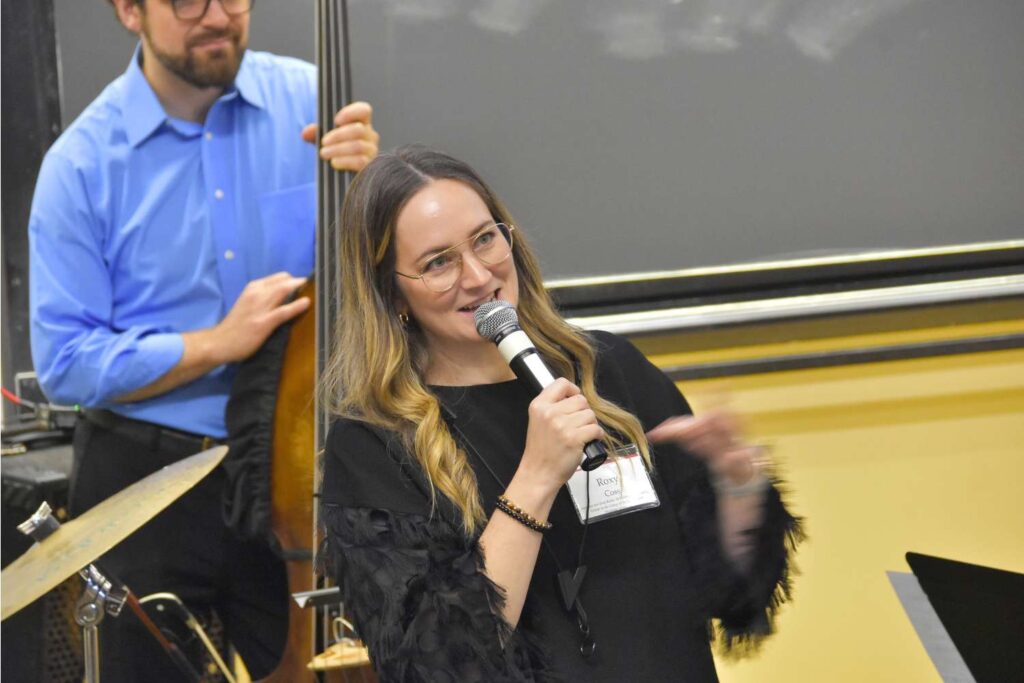
What brought you to the Bailey COE, and what kinds of contributions are you hoping to make here?
I’m officially here for the Bailey COE Think Tank, continuing the tradition to include cross-disciplinary contributors. This year the theme is agency, and the three faculty fellows wanted an artist or musician to complete the team. There’s a biologist [Sonia Sultan], an anthropologist and religion scholar [Justine Quijada], and an African American studies and literature scholar [Garry Bertholf] on the faculty.
haddad book focuses on enviro politics in east asia
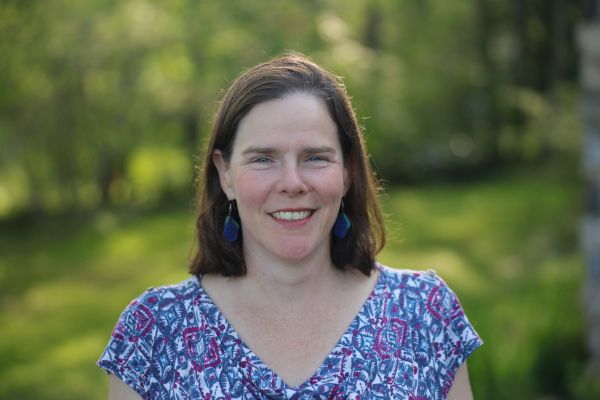
John E. Andrus Professor of Government Mary Alice Haddad, a Bailey COE faculty member, recently published her latest book: Environmental Politics in East Asia. In it, she focuses her research on environmental politics in East Asia, with comparisons between China, Japan, Korea, and Taiwan, looking at the importance of prof-business solutions in creating environmental change in these countries and the common factors of success. Haddad also has a deep interest in the power of local governments and their ability to create tangible progress. I was able to sit down with Professor Haddad to talk about her book and her work.
bryant explores intersection of science and art
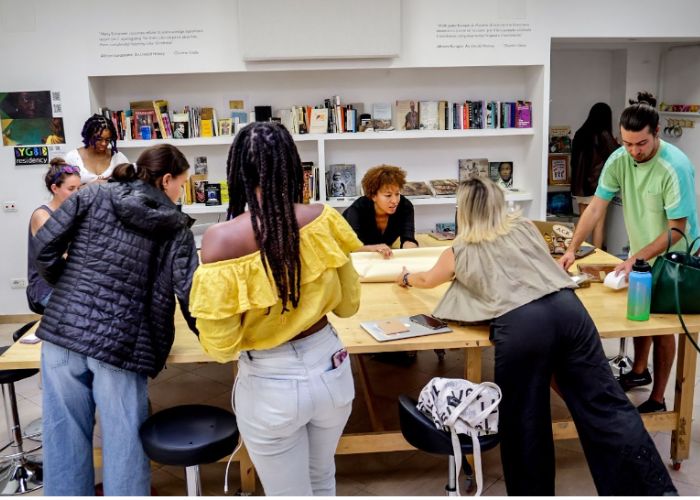
Raquel Bryant, assistant professor of earth and environmental science and assistant professor of environmental studies, received her undergraduate degrees in Geology and Biology from Brown University, and a PhD in geosciences at University of Massachusetts Amherst. Before coming to Wesleyan University, she was a postdoc at Texas A&M University where she worked with the Gulf Coast Repository for the International Ocean Discovery Program. She shares her experience as a scientist and activist, and highlights her recent retreat to Florence, Italy, supported by a Bailey COE grant!
coe student-faculty research funds allow o’neil to study connection between pesticides, als
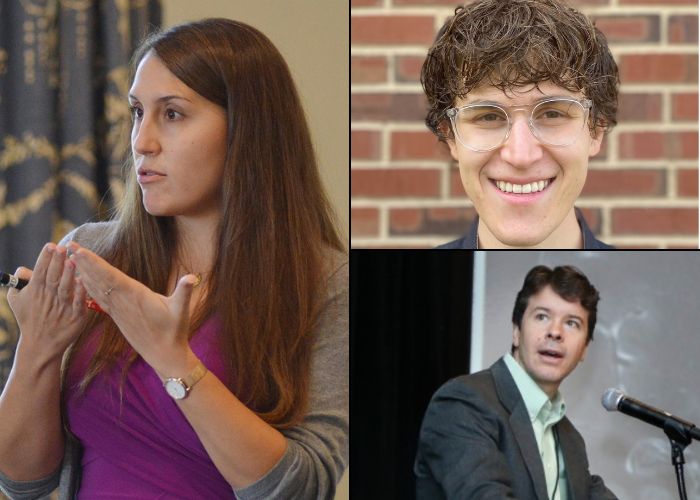
Each year the Bailey College of the Environment provides faculty-student research grants to provide faculty and their students an opportunity to conduct research that would not have been otherwise possible. Research in the O’Neil lab is focused on understanding the structure-function relationship of proteins involved in neurodegenerative diseases, specifically ALS (amyotrophic lateral sclerosis; commonly called Lou Gehrig’s disease) and Alzheimer’s Disease. Thanks to a COE faculty-student research grant and a COE summer fellowship, Alison O’Neil, assistant professor of chemistry, Gloster Aaron, professor of biology, and Aaron Berson ‘24, an NS&B (neuroscience and behavior) and IDEAS (Integrated Design, Engineering, Arts & Society) major with a minor in chemistry, were able to collaborate on Professor O’Neil’s investigation of cis-chlordane as an environmental trigger of ALS.