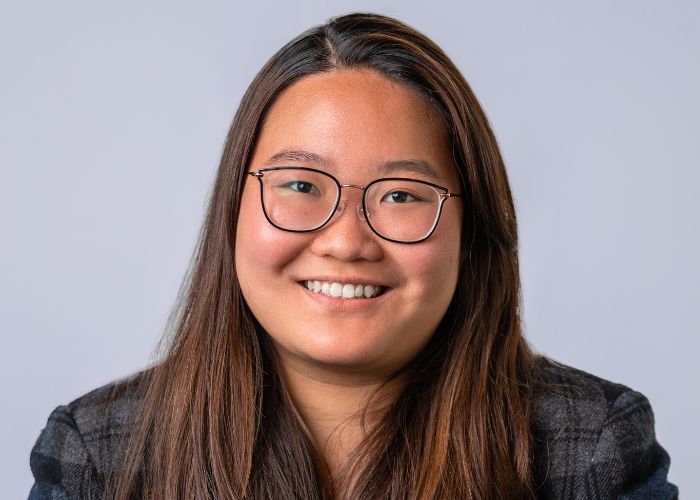
Debbra Goh ‘24 (ENVS/RELI) recently completed a year-long James C. Gaither Junior Fellowship at the Carnegie Endowment for International Peace, in Washington, DC. She is currently a research assistant for the Sustainability, Climate, and Geopolitics Program there.
What research did you work on as part of the Gaither Junior Fellows program?
I finished my tenure as a junior fellow in summer 2025, but I continue to work as a Research Assistant in the Sustainability, Climate, and Geopolitics Program at the Carnegie Endowment for International Peace. I contribute to a range of research initiatives spanning the program’s core focus. My work spans four main areas: the geopolitics of clean energy technology, climate mobility, climate activism, and climate adaptation.
Recent projects include research on how geothermal energy remains a bright spot for American clean energy, and how this technology can be deployed globally. I also maintain the Disaster Dollar Database, a tool that tracks key federal funding flows on natural disaster recovery in the US. FEMA has been making headlines recently, and so I work on policy research studying the implications of reduced federal involvement in disaster recovery efforts for states. The focus of that area of research is to think about how to use the post-disaster landscape to shape long-term adaptation and build more resilient communities.
My year as a junior fellow at Carnegie was incredibly busy but rewarding fellowship. I gained valuable insights into the inner workings of a think tank, learnt a lot about the global climate policy landscape, and gained so many valuable research skills.
How did you navigate the competitive application process for the fellowship, and what advice would you give to future applicants?
I chanced upon this fellowship opportunity incidentally as part of a broader conversation I was having with the Wesleyan Fellowships Office. I had an unconventional path to this fellowship in comparison to some of my peers in the program, but I think it was a great fit that aligned with my academic interests and longer-term goals. Be genuinely interested in research! While having a strong application package can be important, it’s also essential to be able to articulate why you are interested in policy research and how you can contribute to the work being done at Carnegie. And it never hurts to try: It can be really intimidating to apply for such programs, but you miss all the shots you don’t take!
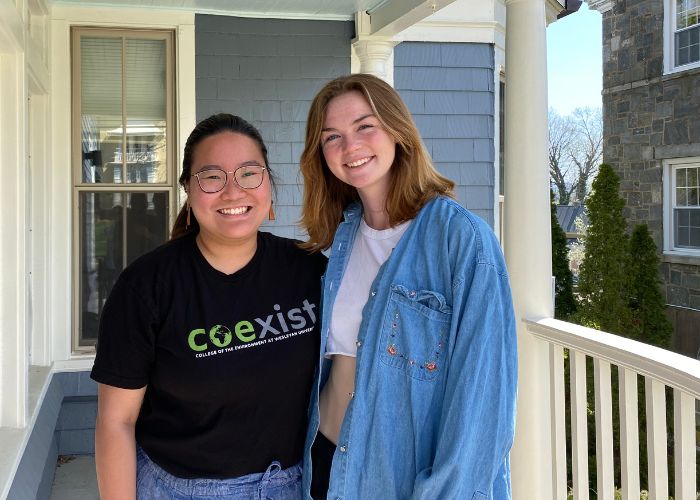
How did your coursework in environmental studies and religion prepare you for the Gaither Junior Fellows Program? How did you manage being a Sustainability Office Coordinator, Green Fund Facilitator, serving on the Sustainability Strategic Plan Committee etc, at your time at Wes?
My time at Wesleyan—majoring in environmental studies and religion, and, more broadly, engaging with the liberal arts curriculum—deeply shaped the way I think and work. It instilled in me a love for interdisciplinary learning and research, which has been central to my experience at Carnegie. At Wes, I learned about the myriad lenses that should be used in problem solving, and that continues to inform how I approach research and policy analysis today. Writing my senior thesis in the Religion Department was especially formative: The experience taught me how to conduct sustained, independent research and how to navigate ambiguity. Those skills have been essential to my day-to-day work.
Based on your experience, what are the biggest obstacles to implementing sustainable policies at the government or corporate level?
I don’t know if I can distill that succinctly, but perhaps: the misalignment of short-term incentives (election cycles, shareholder profits) with longer-term goals, and structural challenges in what society values and prioritizes.
Given your involvement in sustainability at Wesleyan, how do you see campus sustainability initiatives influencing larger policy discussions?
In some ways, campus initiatives function as pilot programs for broader policy ideas and reflect the ideals that youths hold. They also form part of a broader ecosystem of how change happens. For instance, the fossil fuel divestment movement emerged from student-led college activism. The impact of student activism shifted moral norms, and led to larger market influences on the private and philanthropic sectors.
Personally, being involved in campus sustainability initiatives also taught me about navigating institutional structures. Learning how to balance stakeholders with competing priorities, understanding levers of influence, and building coalitions to advocate for long-term goals are all skills essential in navigating larger policy discussions.
I read that you studied abroad in Copenhagen, how did urban studies and climate change planning influence your perspective on climate education around the globe?
My study abroad experience allowed me to live in a city that approaches urban planning and climate policy in a very different way from the US. In Copenhagen at least, the use of alternative transportation modes (bikes!), public spaces, and climate planning all shows how climate consciousness was embedded as part of a broader cultural practice that was then normalized. I became a lot more attuned to smart urban design and how place-based solutions for climate challenges are essential tools in shaping the urban experience.
How do you remain optimistic about our current climate crisis?
I think optimism and hope can be hard to come by some days, but for me, the alternative is even harder to consider. If we accept that nothing can be done, that resignation risks creating a self-fulfilling prophecy where the outcome is widespread, long-term global harm. I view the climate crisis as a deeply intersectional issue: It’s not just an environmental challenge, but also a social, political, economic, and moral one. That can be overwhelming, but I like to think that the stakes are too high for failure to be an acceptable alternative. And incremental and hard-fought change happens every day across the world!