by Kate Miller
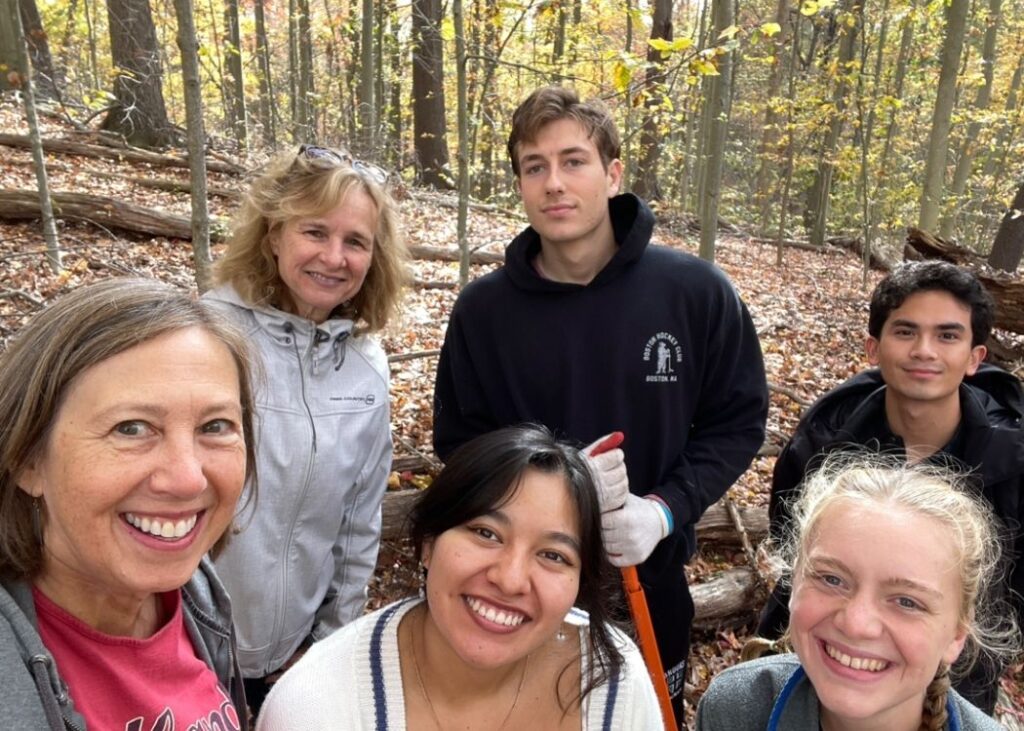
Clockwise from left Visiting Assistant Professor Kate Miller, community volunteer Rebecca MacLachlan, Will Rassier ’29, Leonidas Boutris ’27, Graduate Teaching Assistant Elizabeth Gerbi and Bethzy Meija Jaime ’28 work to remove invasive species such as burning bush from Ravine Park, a city-owned park just a block from campus. 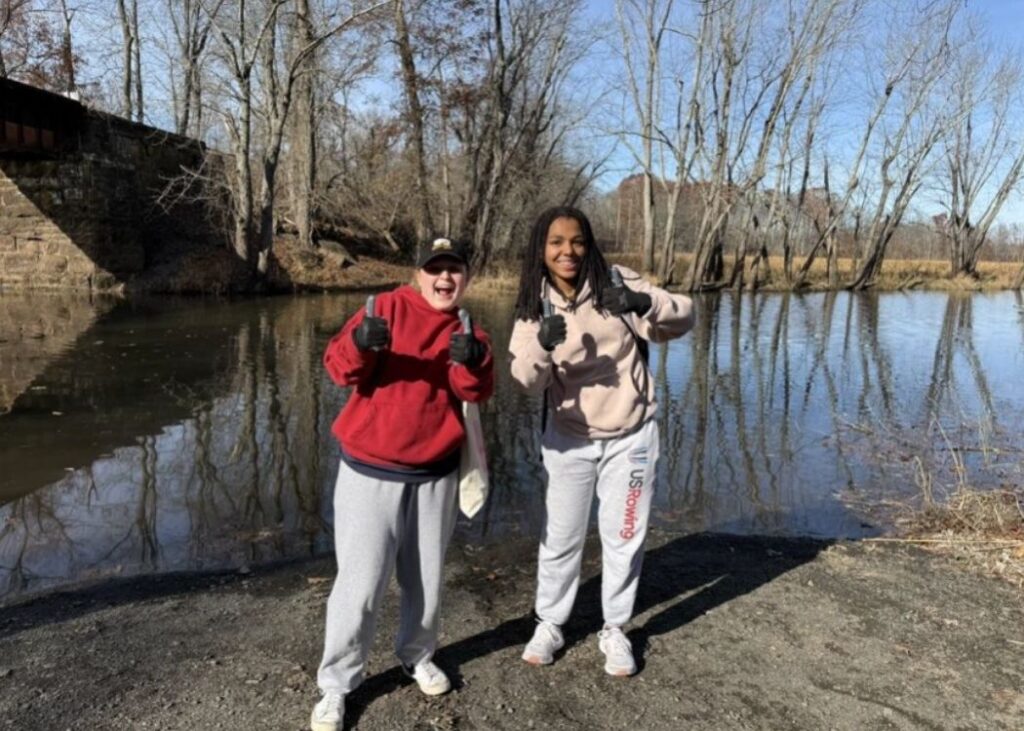
Annabel Sheir ’29 and Ella Hendricks (29 work with others at a clean-up at the Middletown Kayak Launch and Landfill organized by the Jonah Center, a local non-profit that has been expanding recreational use of the site. 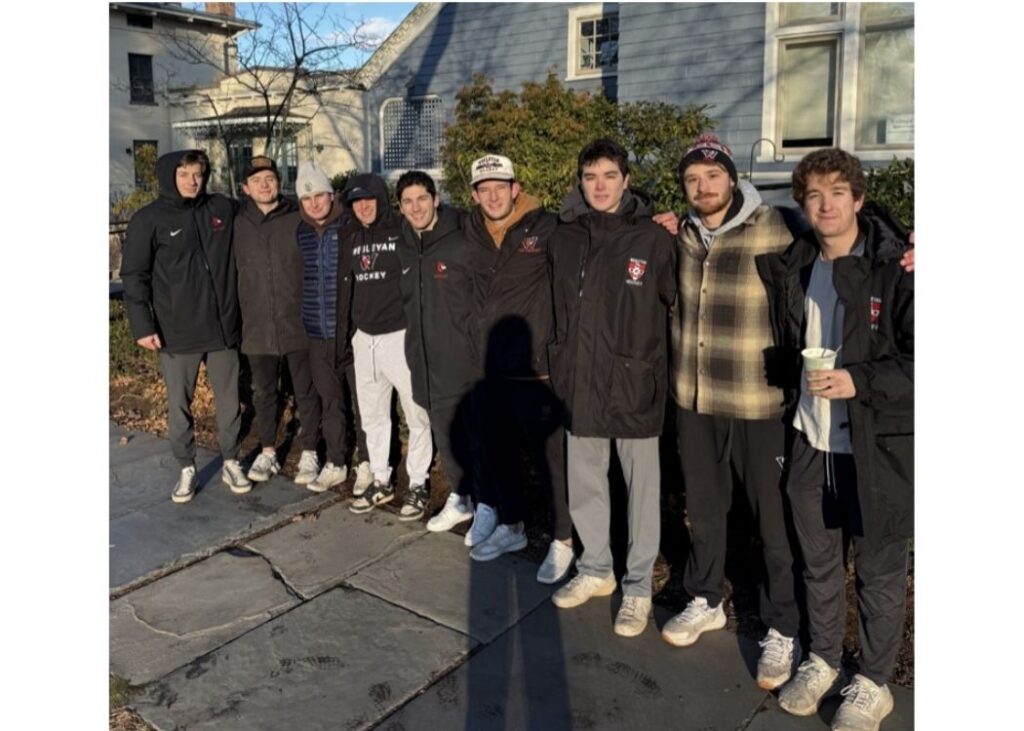
Current and former Intro to Environmental Studies students along with fellow hockey team members help out with a landscaping project at the Bailey College of the Environment, pulling non-native plants out and replacing them with native species. L-R Will Rassier ’29, Dallas D’amato ’27, Jack DesRuisseaux ’29, jack Bosco ’26, Dylan Margel 29’, Danny Judge ’26, Ryan Garvey ’29, Patrick McDevitt ’28, Jakub Kohn ’28. Andie Bisceglia, COE Administrative Assistant, organized the event. 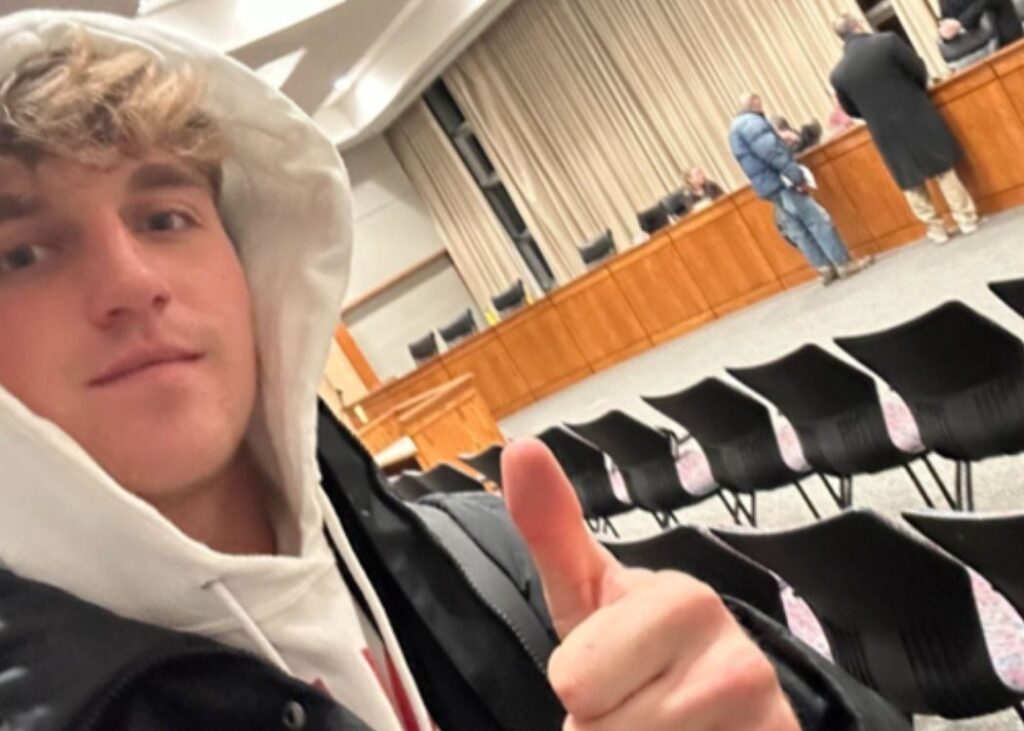
The impacts of those choosing other events are no less important as learning experiences. Attending a meeting of Middletown’s Inland Wetland and Watercourses Agency, Riley Harvey ’29 commented that “…the process was much more sophisticated than I had previously thought. It made me think about what would happen if agencies like this one did not exist; how the environment would be at even greater risk.” 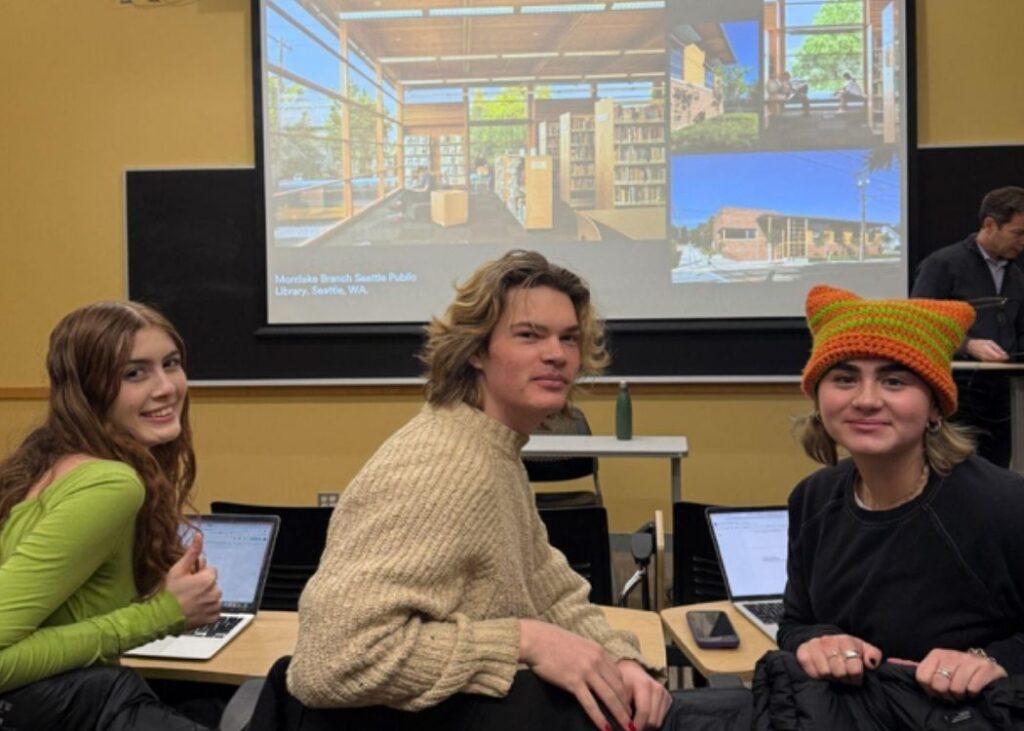
Anya Bernardo ’28, Finnian Hayden ’28, and Louie Borris ’28 attending the Art Lecture: Richard Yancey ’85—Building the Future: Towards a Climate Ready Architecture. 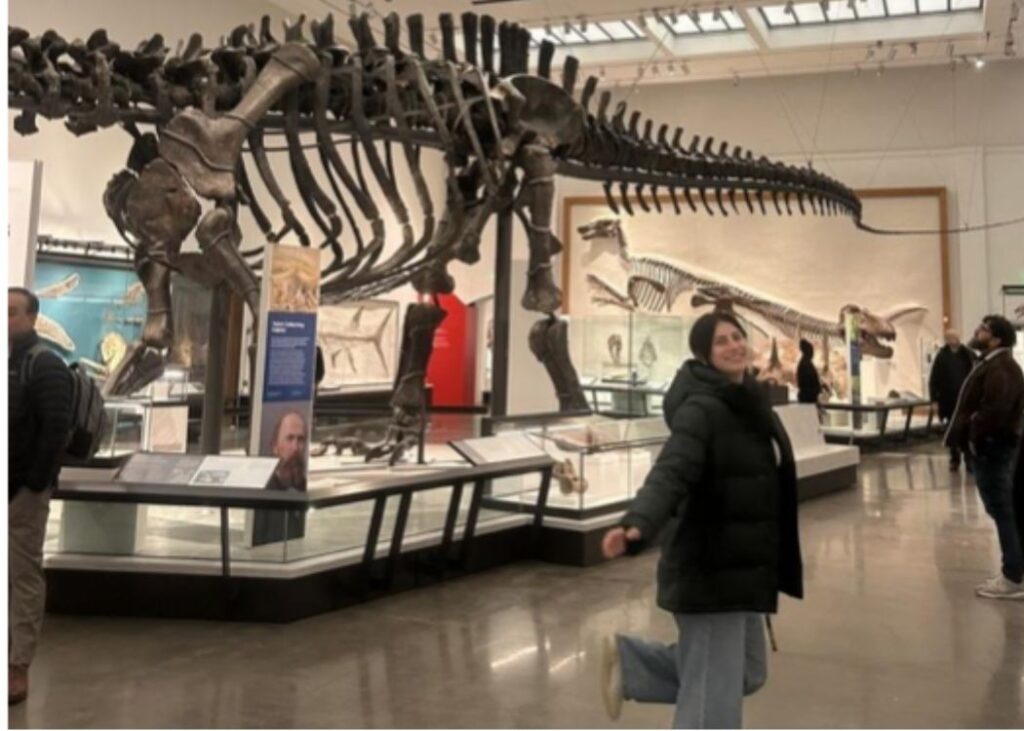
Eliza Lampert ’29 frolics with dinosaurs at the Peabody.
One of the many activities in the primary gateway course to the Environmental Studies degree, Introduction to Environmental Studies (ENVS197), is the “Check it Out” assignment. Students are tasked with attending an environmental event on or off campus and submitting their reflection on key aspects, such as sponsoring organization, goals, audience and their own reactions. These can include films, talks, museum visits, conferences, meetings, workshops and volunteer events such as a landscaping work party, clean-ups and others.
Each semester more than 30 percent of the students choose a service project, and overwhelmingly their reflections convey a sense of comradery and satisfaction, and often a deeper understanding of what land stewardship requires. Most express a strong interest in doing it again.
Annabel Schneir reflected on a clean-up she and another student, Ella Hendricks, participated in at the closed landfill, which now hosts a kayak launch and trail. “I learned about a new place in Middletown, learned about what it looks like when erosion control goes wrong, and got the privilege to meet and observe how dedicated the locals are to preserving their environment. Everyone at the event was incredibly gracious, and it reminded me how good it feels to take action. It is hard not to be troubled by the state of our world, but doing something tangible, however small, makes it feel a little more bearable.”
Students visited a variety of on and off-campus locations for volunteer work, including Ravine Park, a city-owned preserve just a block from campus, which many used for a variety of other reasons including to conduct another project, the Ecosystem Walk, or for inspiration on their Nature & Art project.
The impacts of those choosing other events are no less important as learning experiences. Attending a meeting of Middletown’s Inland Wetland and Watercourses Agency, Riley Harvey ’29 commented that “…the process was much more sophisticated than I had previously thought. It made me think about what would happen if agencies like this one did not exist; how the environment would be at even greater risk.” At the same meeting Sebastian Ortiz reflected “The reliance on maps to analyze specific landscapes and the systematic debate for each case offered a tangible example of how seriously the environment is being taken care of in this town. What I learned is that environmental protection is not just about broad policy, but about specific oversight of every inch of land, often hinging on technical specifications. My experience made me wonder how often the public truly challenges these motions and whether the technical criteria are routinely upheld after approval.”
Students have attended meetings of government agencies from local to federal, quasi-state and non-profit groups, such as the Sierra Club campaign on pipelines in New England. These experiences help students see the intersection of policy and practice, and the differences between the role of institutions and individuals.
Students attending Wesleyan events, such as talks, workshops and films, typically enhance the experience for others as well, boosting attendance and being active participants who are attentive and asking questions. They explore the intersection of the environment with other fields. Many in the class are first-year, and the experience also serves to expose them to the richness of intellectual explorations on campus.